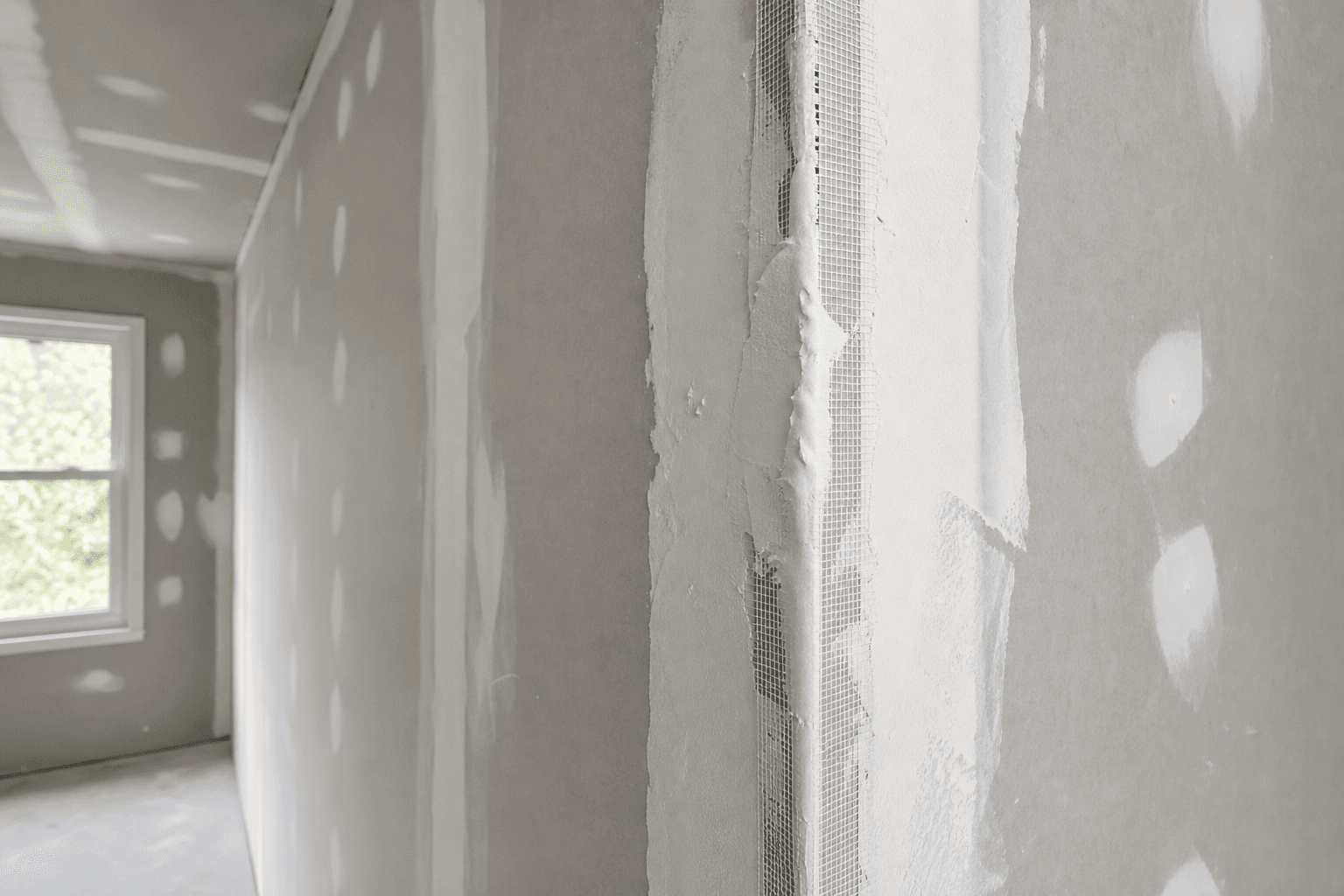
Decide where your DIY work should stop
Douglas Taping serves Saddle River, including homes near Rindlaub Park, the Borough recreation area with the Great Lawn and bandshell. If you hung the board yourself but want help finishing it, start by showing us the room. You do not need to fix every imperfect seam before asking a professional to take over.
The Borough of Saddle River Building/Construction office requires applicable inspections before work is concealed. Tell Douglas whether an inspection is pending and ask the contractor or permit holder to confirm what must remain visible. If something was covered too early, disclose it so the appropriate official can advise; a finisher cannot approve concealed work on the inspector's behalf.
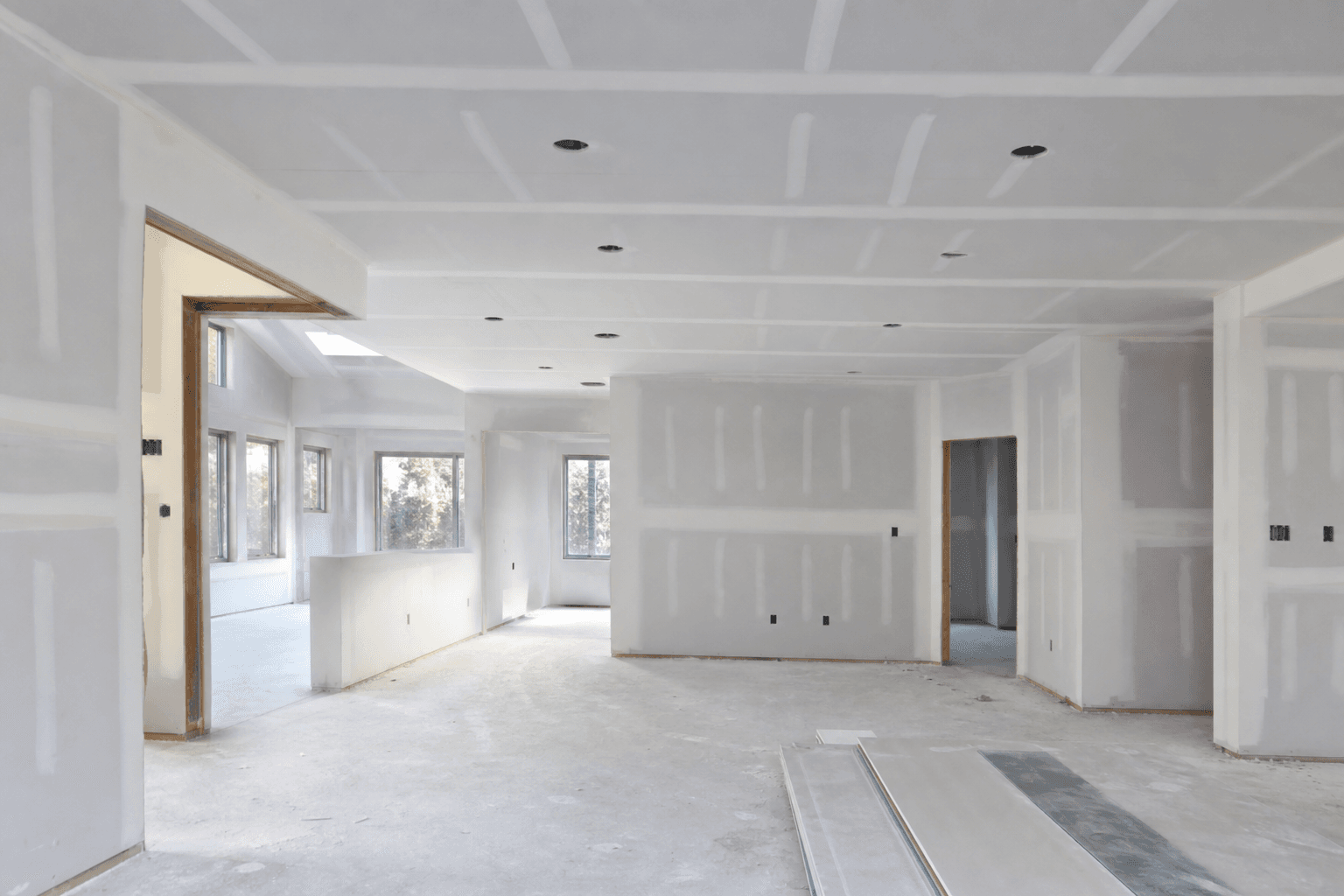
Hanging puts the drywall panels in place. Finishing smooths the seams and screw heads so the room is ready for painting. They are different skills, so needing help with the second part does not mean you should have known how to do it all.
Hanging and finishing require different skills. It is reasonable to ask for help when seams stay visible or corners become frustrating, even if putting up the panels went well. More compound is not always the answer.
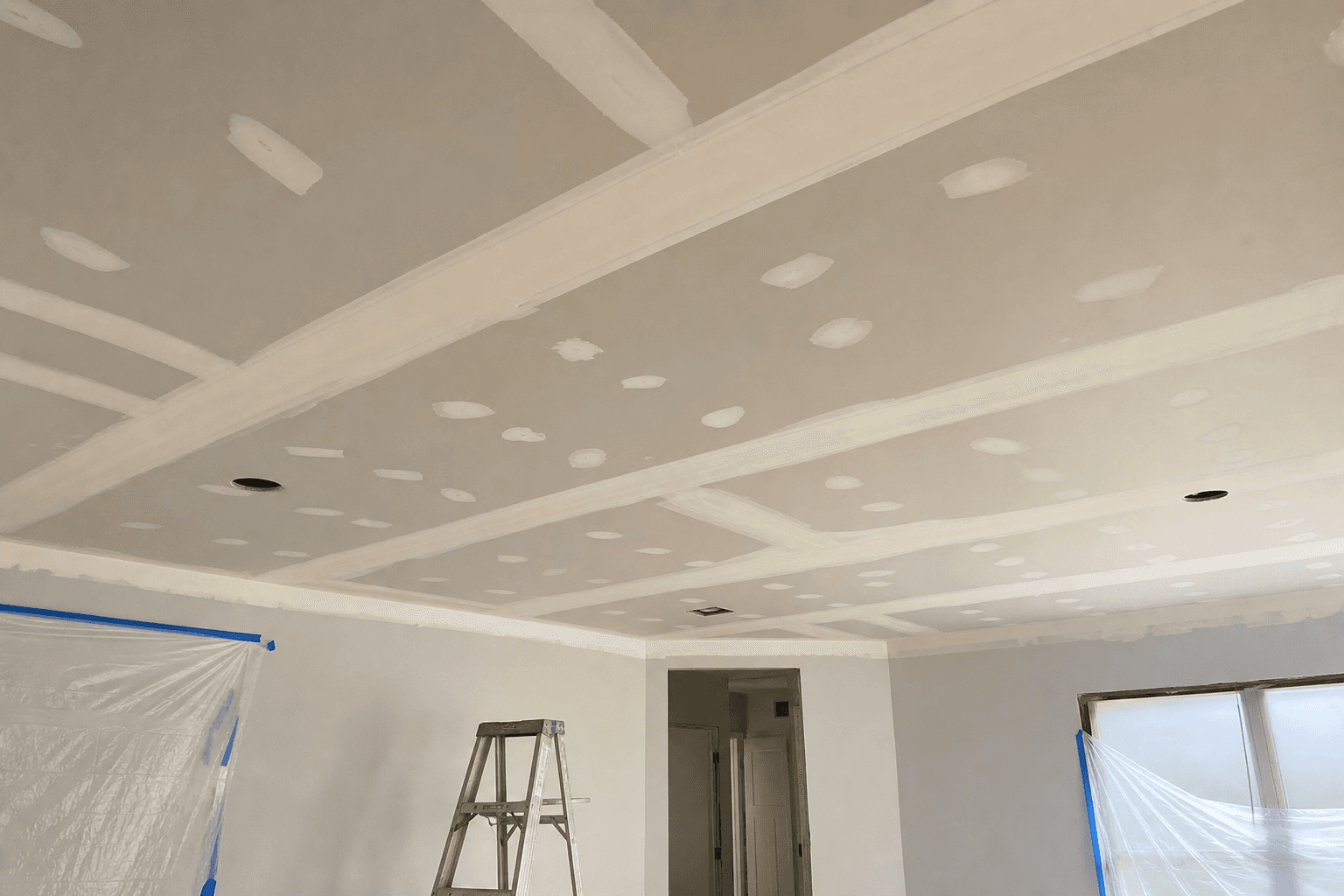
If the corners are frustrating you or each new coat leaves more ridges, pause and show Douglas the work as it is. You do not need to make it look finished before asking for help.
If the flat seams are going well, you like the results, there is no sign of moisture, mold, sagging or damaged board, and the work will not cut or sand older painted surfaces, plaster or texture of unknown lead or asbestos status, carrying on yourself may be reasonable once any required inspection allows it. Seams that look good do not prove the installation behind them is sound. If corners, earlier coats or overall flatness leave you unsure, have the work looked at before adding more compound. Our Saddle River taping and finishing scope can include seams, corners and finish-level selection, but acceptance of owner-hung or partly finished walls must be confirmed for each project.
Confirm what can stay before more finishing begins
Finishing panels that are ready for tape and compound is one job. Correcting work that cannot simply be finished as it stands is another. If a seam, corner or fastener problem has to be fixed first, that correction is separate work with its own time and cost. Find out which category your room falls into before anyone adds another coat.
Briefly describe what you have done. If you still have the compound or tape packaging, a photo can help, but you do not need to recreate a materials list. Ask: "Can you work with this, and what needs fixing first?" Have any corrections included in the estimate rather than assuming you must do them yourself.
When inspection is needed, the permit holder should coordinate it with the Borough and share the outcome with Douglas before finishing conceals anything. If you hold the permit yourself, ask for help identifying the next required step. An inspection appointment is not a passed inspection, and inspection approval is separate from whether earlier finishing needs correction.
Photos cannot show whether the board is properly supported or whether hidden work meets safety requirements. Douglas can explain what needs checking in person and whether another professional needs to be involved.
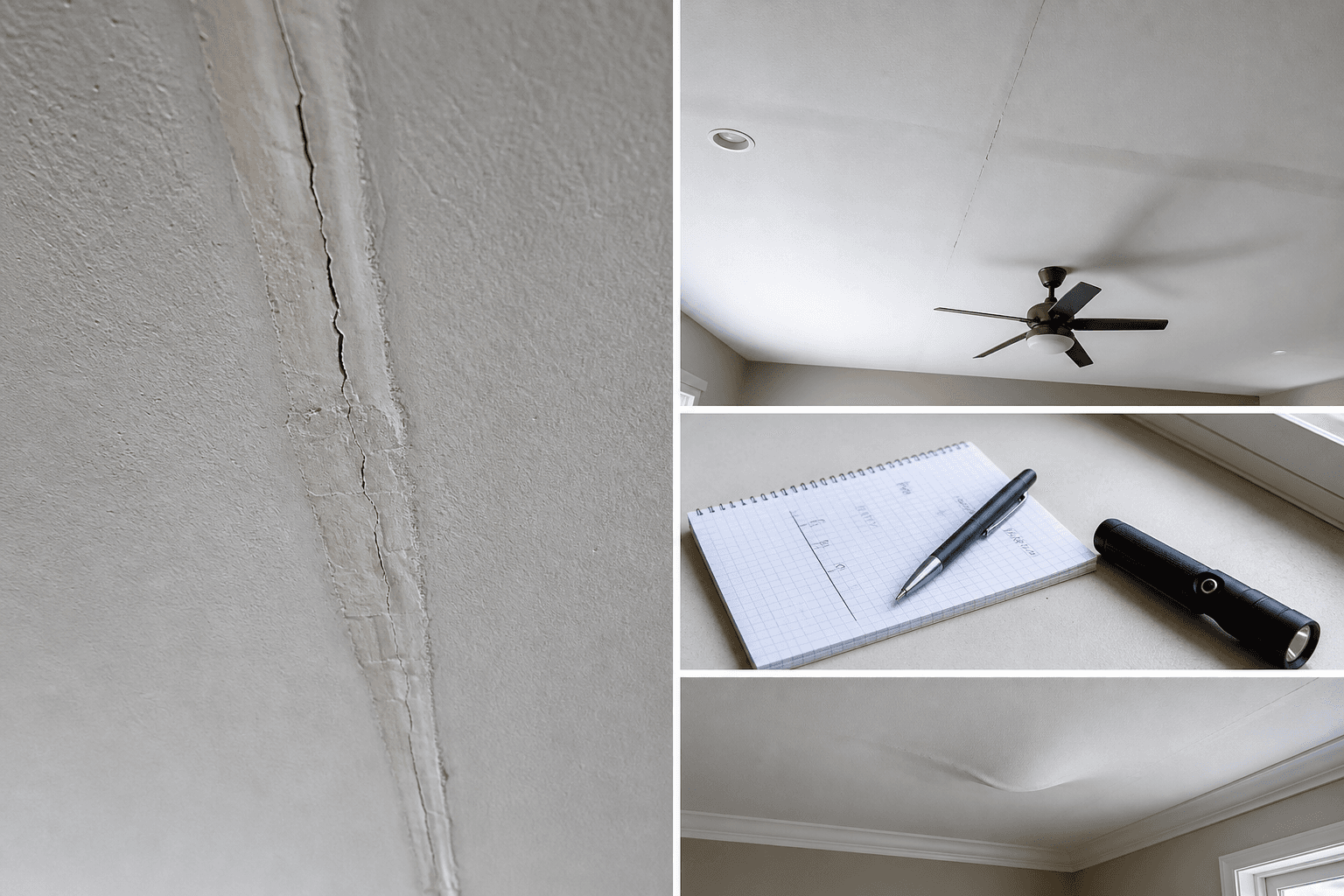
Mention any moisture, mold, sagging or damaged board up front. These are conditions to investigate, not something to bury under compound. If corrections would mean cutting or sanding older painted surfaces, plaster or texture, treat their lead or asbestos status as unknown until it has been checked rather than assuming the disturbance is safe.
Show the room, the details and the work already done
Douglas Taping reviews scope by phone or from photos and schedules a site visit when one is needed. The quote form accepts up to five photos, with a maximum of 10 MB each, so choose shots that together cover the whole job rather than five versions of the same wall.
Start with a wide view of the room and a closer photo of the spots that worry you. Include the ceiling if you want it finished too. Show the current condition rather than trying another coat for the photos, and take pictures only from a safe position.
Include your address, preferred timing and whether people will be using nearby rooms. Mention stairs or difficult access. Douglas can measure the walls and ceilings; you do not need to calculate surface area before asking for help.
Good photos make the first conversation faster and more specific. They do not confirm that your existing work is acceptable, lock in a price or set a start date.
Choose the finish around the paint and lighting
If you already have paint or lighting plans, share them with Douglas. If not, ask for help choosing a finish that suits the room. Flat paint tends to hide minor variation, while glossier paint makes ridges and dips easier to see.
Sunlight from a side window or a light close to the wall can make small ridges stand out. Point out where you notice them and ask whether extra smoothing would help.
Our Taping and finishing service ties finish-level selection to those two factors. In brief, Level 4 is suitable for many walls under flat paint. Level 5 adds a thin skim coat across the entire surface instead of treating only the joints and fastener heads. Harsh lighting and glossy paint are good reasons to discuss Level 5, but they do not make it mandatory, and no finish level promises that every imperfection will disappear.
A full-surface skim coat takes more work than finishing seams alone. Ask Douglas where that extra work would make a noticeable difference and what it adds to the price, rather than choosing the higher finish everywhere by default.
Still deciding on paint or fixtures? Say so when you ask for an assessment. An open decision is more useful to a finisher than a guessed finish level that later turns out not to suit the room.
Compare estimates for the same work
Two estimates can look far apart because one includes correcting earlier work and the other does not. Ask whether each covers the same rooms, necessary corrections and the finish you agreed on. If one adds full-surface smoothing, ask why it is recommended.
Ask whether sanding, skim coating, primer, paint and final cleanup are included or assigned to someone else. Douglas Taping offers painting only as an add-on to drywall work. The drywall finishing-cost guide shows how to compare finishing-only proposals without mixing them with full installation prices.
In an occupied home, also ask who handles dust containment and ventilation, and who protects the people living there and the rooms next to the work area. Sanding dust travels, so settle these responsibilities in writing before work starts.
Published rates rarely help. Many figures online mix complete hanging-and-finishing work with finishing-only labor and seldom say what was measured or included. A room you have already hung may need less work than a full installation, or more if corrections come first. Without a review of the actual room, nobody can reliably name a project price or a fair local rate.
A quote request becomes a confirmed estimate only after we review the project details and agree on scope. Get the accepted work and included corrections in writing before continuing; scheduling depends on availability, materials, project size and site access.
For drywall finishing in Saddle River, call Douglas Taping at (877) 551-9553 with photos and a short description of what you have done. Ask whether we can take over and what, if anything, needs correcting first. Pause further work until that plan is agreed.
Common questions
Should I keep finishing the drywall myself or hire a pro?
If seams or corners are becoming frustrating, pause and ask Douglas to assess what is there. Do not cover moisture damage, loose board or sagging with more compound. Suspect older materials need assessment before sanding or cutting, and required inspections must happen before work is concealed.
First time taping: can a finisher work with what I have done?
Possibly, but an assessment is needed. Send room photos and close-ups of the spots that worry you. If product packaging is still handy, a photo helps. Douglas can explain what can stay and what needs correcting; acceptance is not guaranteed from photos alone.
How much does it cost to finish drywall?
The room, earlier work and desired finish all affect the price. Ask whether corrections are included and whether the result is paint-ready or includes optional painting. Douglas should take the measurements needed for a confirmed estimate.
What are common mistakes when taping and mudding drywall?
Adding more compound over uneven earlier coats can make correction harder. Covering leaks or loose board does not solve them either. Stop when the work becomes uncertain and have it assessed before continuing.