Know whether the proposal covers panels, skim coating or removal
A smooth ceiling at the end of the job does not tell you what work produced it. Before comparing prices, find out whether each proposal adds new panels, applies a thin finishing layer, scrapes off the texture or takes the ceiling itself down. These are different scopes of work, even when the finished rooms look alike.
An overlay fastens new drywall panels over the existing texture. Douglas Taping serves Alpine, home to Kearney House at the north end of Alpine Picnic Area in Palisades Interstate Park. Our popcorn ceiling removal and covering options include both scraping texture and covering it with sheetrock, with hanging, taping and finishing. The choice depends on texture, ceiling age, condition and budget. We do not handle hazardous materials, so suspect texture needs assessment and testing before disturbance.
Skim coating is a different job. A thin layer of joint compound, the same material used to smooth drywall seams, is spread across the surface to even it out, and no new panels go up. Our skim coating service is its own scope, not another name for a panel overlay.
Scraping takes off the texture but leaves the ceiling board or plaster in place; exposed cracks or unevenness may then need repair. Taking the ceiling down removes that base too and opens the space behind it. Ask every Alpine estimate to state what stays, what is added and what is removed. A smooth final appearance does not make these equivalent jobs.
Check what would be left above the new ceiling
Before accepting a proposal to hang drywall over a popcorn ceiling, find out what would stay hidden above it. The first question is not panel thickness. It is whether the texture, the paint on it and the joint compound underneath have been assessed for hazards such as lead or asbestos. That assessment comes before anyone scrapes, sands, cuts or drives screws through those layers. Covering a ceiling is not permission to disturb untested material, and an overlay does not by itself settle how suspect material in your home should be handled.
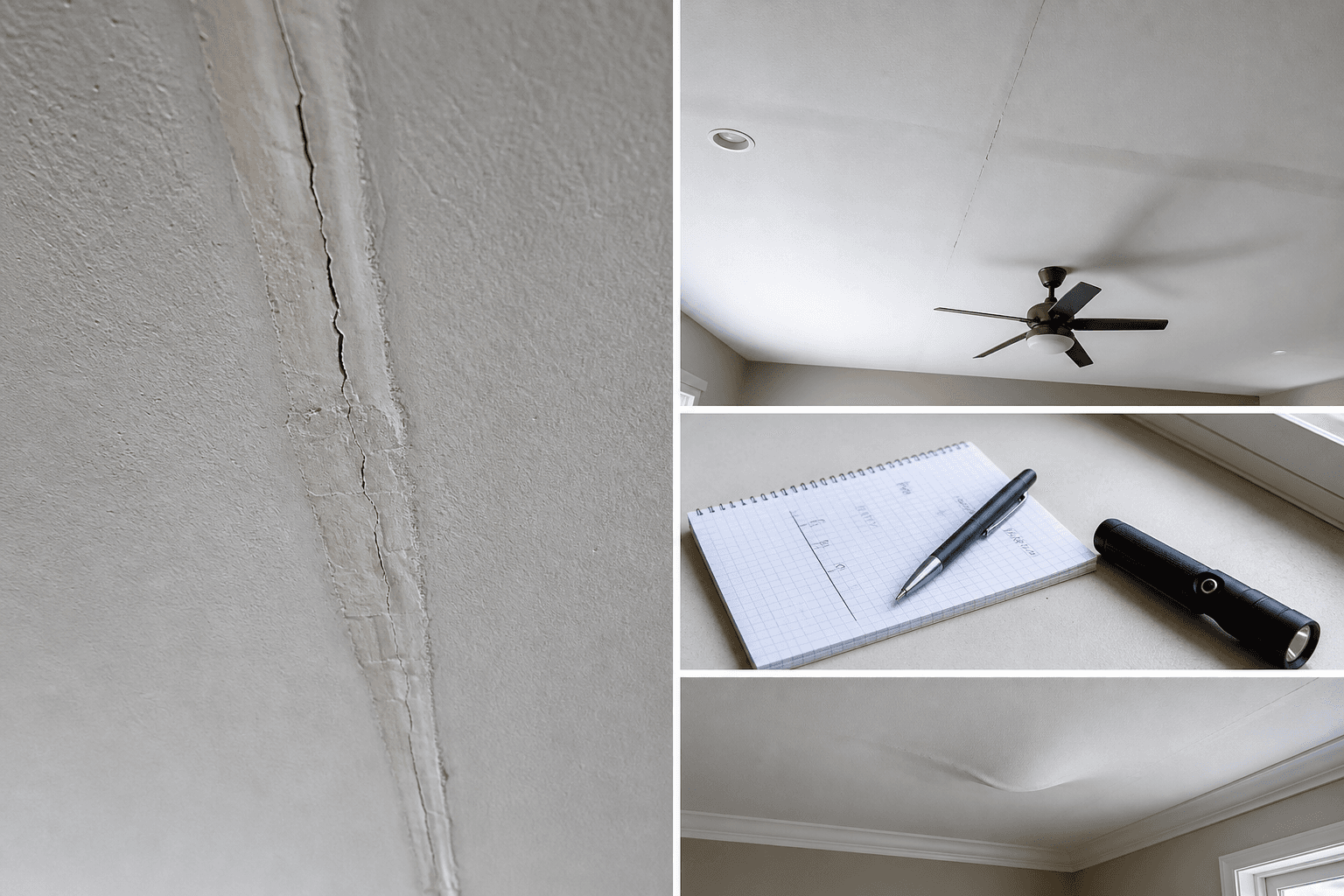
Douglas should assess what the ceiling is made of, how securely it is attached and whether it can support an added layer. Your part is to mention visible sagging, stains or returning cracks, not to test the ceiling yourself. Keep people away from a sagging or failing area.
Then separate looks from damage. A ceiling you simply dislike is a different case from one with stains, cracks that keep coming back or soft, damaged board. Those signs point to a cause, and new panels would hide it rather than answer it.
Leak damage needs particular care. Fixing the leak and letting the area dry does not by itself show that the old board can stay. The board's condition, the kind of water involved and any damage or contamination behind the surface all matter. Unresolved damage belongs under ceiling repair, keeping in mind that a cosmetic repair does not fix what caused it.
This is also where the options really differ. An overlay keeps the old ceiling and its texture concealed. Scraping disturbs the texture but leaves the ceiling in place, so the space behind it stays closed. Taking the ceiling down opens that whole space, though existing attic access or a selective opening may allow some inspection or work without removing the full ceiling. Which route fits depends on what needs to be checked or done up there, and none of these is the right choice until the existing ceiling has been assessed.
Account for the lower ceiling at fixtures and trim
Adding panels brings the finished ceiling lower into the room, and how much lower depends on the whole assembly, not only the board. We use 1/4-inch or 1/2-inch sheetrock screwed to the ceiling framing, and the choice depends on how straight the existing ceiling is. Neither number alone tells you the final height change.
Ask Douglas how much lower the finished ceiling will be and whether it needs straightening first. The contractor should choose the board, support and fastening method rather than ask you to specify an overhead installation.
A lower surface can change how lights, vents, an attic hatch or crown molding meet the ceiling. Point out anything you want to keep and ask whether the quote includes making it fit the new surface.
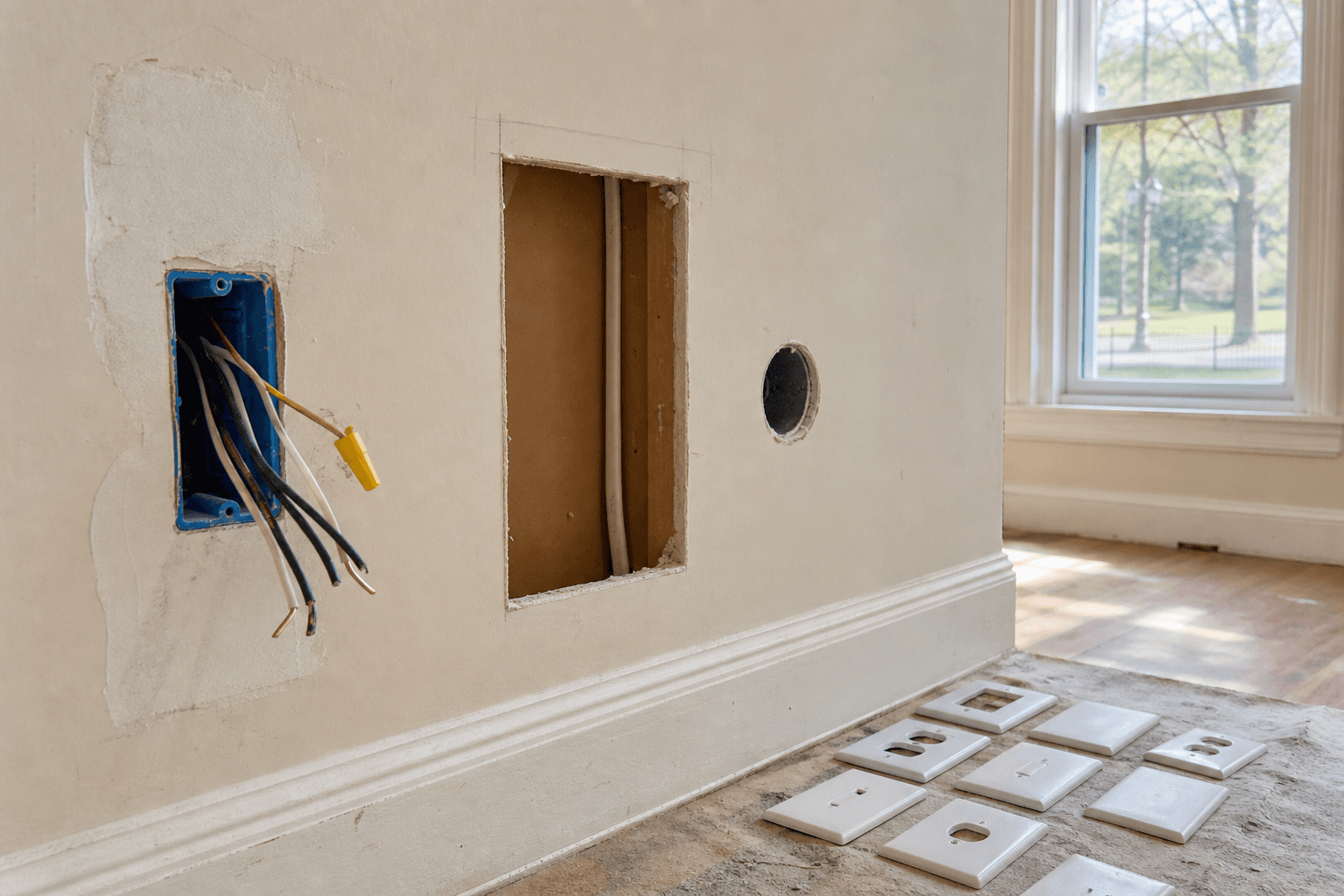
Some may need little attention and others more, and nobody can say which until the room has been looked at. Electrical safety, fixture support, clearances around vents and openings, and any fire-rated ceiling assembly deserve review by the appropriate trade or authority. Drywall installation does not automatically include electrical or HVAC work, so get in writing who handles each adjustment before the panels go up.
If lights or electrical boxes need adjustment, ask the contractor to coordinate the electrician and confirm any requirements with the Alpine Building Department. Required inspections must allow closure before the ceiling is covered. A drywall quote does not automatically include electrical work.
Separate installed drywall from a finished, painted ceiling
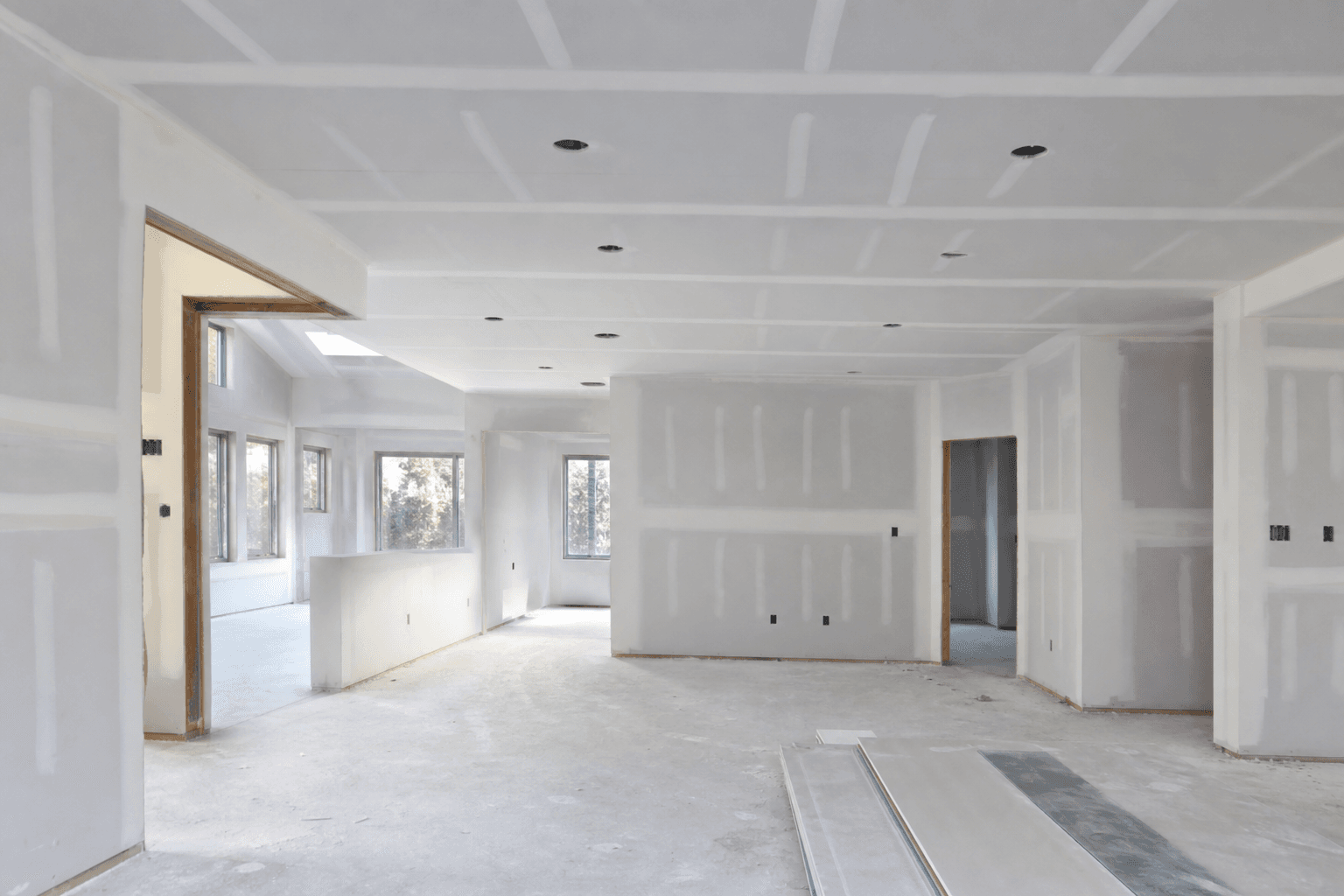
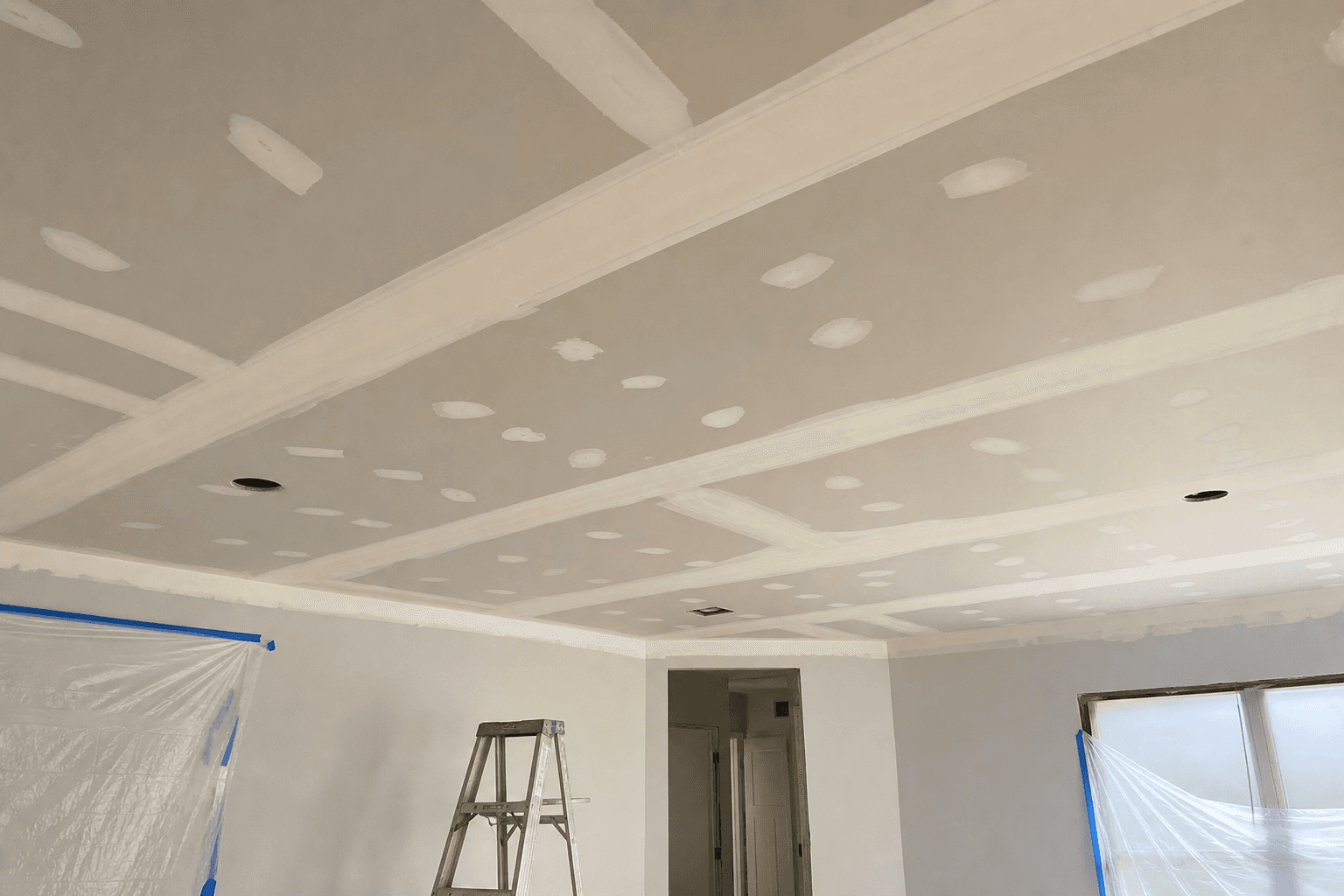
Our drywall installation includes taping, joint compound and sanding to the finish level your project requires, which leaves the ceiling paint-ready. Paint-ready is not the same as primed and painted, so check which of those steps an estimate actually covers.
Hanging adds the new panels; finishing smooths the seams and screw heads so they read as one ceiling. Ask for a paint-ready result, not merely installed board. Douglas handles the materials and application steps.
Ask the estimate to name the finish level and say whether primer, ceiling paint and affected trim painting are included or assigned to another painter. We can add painting to the ceiling work, but do not offer painting independently.
Level 5 is the highest drywall finish. After the joints are finished, a thin coat goes over the entire ceiling so the surface takes paint more evenly. When defining the finish, tell us how the room is lit and what paint sheen you plan to use. Strong side light or a glossier paint are reasons to consider Level 5, not proof that every ceiling needs it, and no finish hides every flaw under every light. That full coat goes over new panels, which is a different job from skim coating directly over the old popcorn texture.
Compare the whole room scope, not just the panel price
Ask each contractor to explain the complete result: a safe, suitable ceiling cover, the agreed smooth finish and any changes needed to lights or trim. Check whether protection, cleanup and painting are included. If an assessment or specialist work must happen first, have that made clear before committing.
Living in the house during the work adds its own items. Ask how the crew will reach the room, how furniture and floors will be protected, what dust control is planned and whether the work area must be emptied or closed off. Sanding is part of the installation, so plan for dust rather than assuming it away. A crew used to working in occupied homes does not mean anyone can safely stay in the room while work is underway.
If you are also weighing removal, ask whether it means scraping the texture or taking the ceiling down, and have both proposals state what material stays and what comes out, what is included and excluded, and which related trades are someone else's responsibility. Neither approach should be assumed cheaper or quicker until both are priced against the same room.
Judging suitability and specifying the overhead installation and its connections to fixtures and trim is the professional's job. Your most useful preparation is simpler: photograph stains, cracks, sagging areas, fixtures and trim, and note how the room is used, without scraping, poking or sampling anything suspect.
Ask Douglas to explain what still needs checking and who will coordinate any other trades. You should not have to turn photos into a technical specification before getting an estimate.
For popcorn ceiling removal or a drywall cover in Alpine, call Douglas Taping at (877) 551-9553 with ceiling photos, known texture history and the fixtures you plan to keep. Ask for scraping and covering to be compared against the same finished-room scope where both are suitable.
Common questions
Can you cover a popcorn ceiling without removing it?
Yes, when the ceiling is suitable, new drywall can cover the texture instead of scraping it off. Douglas should assess the ceiling's condition and support first. Suspect paint, texture or compound needs hazard assessment before even the screws for a cover pass through it.
How much does it cost to drywall over a popcorn ceiling?
The condition of the ceiling, room access and any changes to lights or trim affect the price. Ask for a quote that includes a smooth, paint-ready ceiling and room protection, with painting clearly priced as an option. Scraping and covering should be compared for the same finished result.
What kind of panels can I put over a popcorn ceiling?
Douglas uses 1/4-inch or 1/2-inch sheetrock for ceiling lamination, depending on how straight the ceiling is. The contractor should choose the appropriate board and attachment after assessment. You can ask how much lower the ceiling will be and whether lights or trim need adjustment.
Can you put new drywall over an old drywall ceiling?
Sometimes, but the contractor must assess attachment, added weight and the existing materials first. New panels must not hide sagging, recurring leaks or loose layers. Suspect older materials need assessment for lead or asbestos before disturbance.
Do I need to replace ceiling drywall after a leak?
Not always, but drying alone does not prove the board can stay. Fix the leak and have drying, board condition and possible contamination assessed before rebuilding or covering anything. A new surface cannot resolve damage hidden above it.