
Douglas Taping logo

Popcorn Ceiling Removal

Popcorn ceilings scraped off or covered with new sheetrock, depending on the ceiling, then finished smooth and paint-ready.

Get a Free Estimate
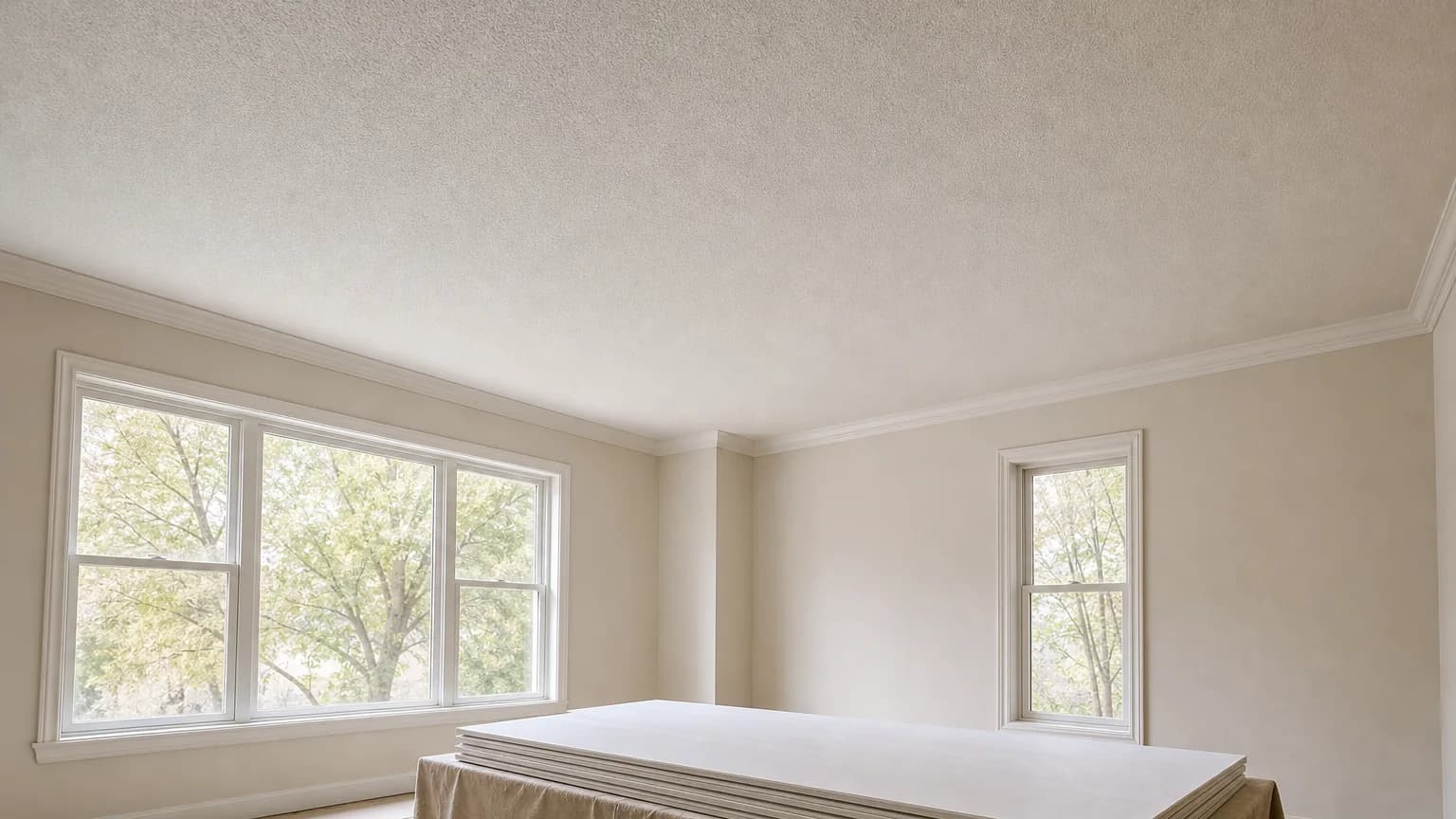
Illustration: An intact textured ceiling with new drywall panels ready for a covering approach
Illustrative image of this service, not a Douglas Taping job-site photograph.

We remove popcorn ceilings two ways: scraping the texture off, or covering it with new sheetrock. Either way, you end up with a smooth, paint-ready ceiling.

Should a popcorn ceiling be scraped or covered

It depends on the type of popcorn, how old the ceiling is, and what condition it is in, so we do both. Scraping works when the texture comes off cleanly and the ceiling underneath is sound. Covering, or laminating, means fastening new sheetrock over the texture and finishing it smooth, which is often the better route on older or rougher ceilings.

We always walk you through both options with the pros and cons of each, and the choice usually comes down to your budget and how the ceiling looks once we check it. Very old popcorn texture can contain asbestos, so it should be tested before anyone scrapes it.

Related work: Drywall Ceiling Installation, Ceiling Skim Coating, Ceiling Repair.

Is covering a popcorn ceiling as good as removing it

Yes, covering a popcorn ceiling gives you the same smooth, paint-ready result, and it can be the better choice when the old ceiling is uneven or the texture won't come off cleanly. The new sheetrock becomes a fresh surface that gets taped, finished, and sanded like any new ceiling.

We use 1/4-inch or 1/2-inch sheetrock depending on how straight the existing ceiling is. Scraping keeps the original ceiling height and can cost less when the texture releases easily and the surface underneath is in good shape.

Related reading: Ceiling Repair in Westfield: Why Do Seams Keep Cracking?, Popcorn Ceiling Removal in Alpine: What If You Cover It With Drywall?.

What changes when popcorn texture hides cracks

When popcorn texture hides cracks, the job changes from texture removal to ceiling assessment. Scraping can reveal seams, old repairs, stains, or cracks that were not visible under the texture, which can expand the scope after the mess has already started.

If scraping uncovers more cracks or rough patches than a skim coat can fix, laminating over the ceiling is usually the better option. That's why we look at the ceiling before choosing a method, and explain what each one would involve.

Questions about this work

Do you scrape popcorn ceilings or cover them?

Both. The type of popcorn, the age of the ceiling, and its condition decide which makes sense, and we give you both options with the pros and cons for your budget.

Will the ceiling be lower after lamination?

Only by the thickness of the new sheetrock, 1/4 or 1/2 inch depending on how straight the existing ceiling is. Scraping doesn't change the height.

Can popcorn ceiling removal fix hidden cracks?

Lamination creates a new finished surface over the old ceiling. If there are leaks, sagging, or loose material, those issues still need assessment first.

What finish does the new ceiling get?

The new ceiling is taped and finished smooth to the level the room's lighting and paint plan require.

Which is messier, scraping or covering?

Scraping is usually messier because the texture comes down into the room. Covering avoids most of that, though cutting, taping, and sanding the new sheetrock still need protection and dust control.

Get Started

Get a Free Estimate

Send a photo of the ceiling, one close-up of the damage, and tell us roughly how big the area is.

Upload up to 5 photos to help us provide an accurate estimate. (Max 10MB each)

Response within 24 hoursPrefer to call? (877) 551-9553