Paint can cover a seam without repairing it
A seam that reopened after a touch-up deserves a closer look before more paint. Douglas Taping provides ceiling repair in Westfield, including the area around Mindowaskin Park on East Broad Street. Tell us what you remember about earlier repairs; you do not need a complete repair history to ask for help.
If the crack appeared after a renovation, mention that when you call. Douglas can assess the ceiling and ask the responsible builder about work behind it if needed. For repairs involving broader construction, have the contractor confirm requirements with the Westfield Building Department. A permit search is not needed to describe a recurring crack.
Before repainting a reopened seam, have the joint assessed rather than repeating the same cosmetic touch-up. Our ceiling repair and drywall taping and finishing scopes separate the joint work from decoration. Painting is available as an add-on to the repair, not independently.
A seam is where two drywall panels meet. Repairing it means fixing that connection, not just hiding the line with paint. That is why a fresh coat can look better at first while the same crack later comes back.
A returning crack can have several causes, including an earlier repair that did not hold or movement behind the ceiling. The line alone does not identify the cause or prove there is a structural problem. Douglas can assess what needs attention before recommending another repair.
Share what you have noticed
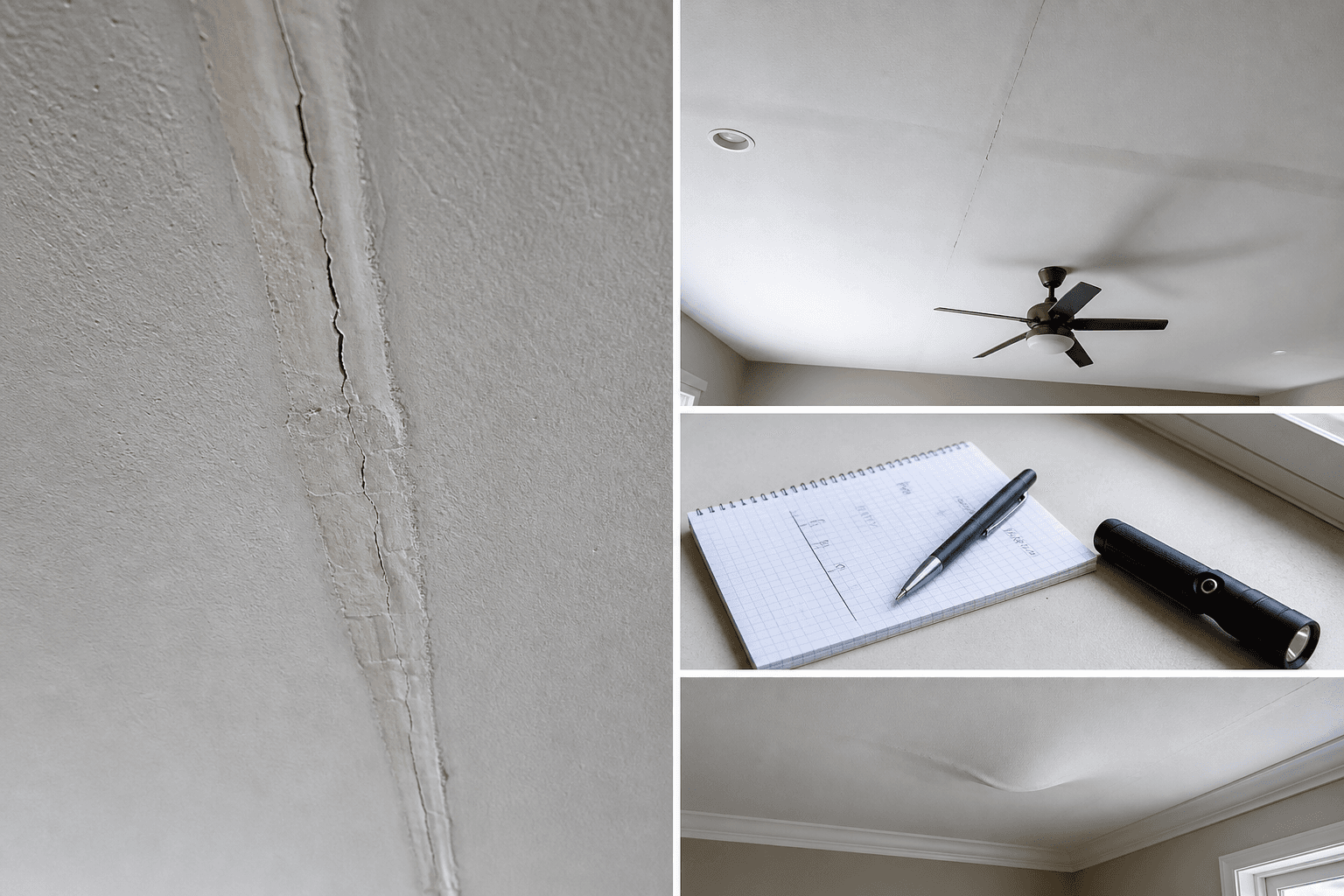
Start with what you can see from the floor. Note which rooms are affected and which seams show the line, then whether the problem follows one joint or shows up in several places. A single recurring line and scattered cracks in different rooms lead to different conversations about scope.
Mention roughly when you noticed the crack and whether it has been repaired before. If you do not know what the earlier repair involved, that is fine; Douglas can assess the current condition.
Keep observed facts apart from guesses. "The seam was patched last year and reopened" is useful history. "The house is settling" is an explanation nobody has verified, so leave it out or label it clearly as a guess.
Tell Douglas about nearby stains or sagging too. Keep people away from a sagging ceiling, and do not press on, scrape or open it to learn more. A professional should assess those changes before a surface repair.
People often ask whether a hairline crack is safe to ignore. Crack width and appearance are not a reliable safety test, and a thin line is not proof that nothing is going on.
A few photos and a short explanation are enough to start: "This line came back after last year's repair" or "I noticed a stain here after the leak." Douglas should investigate the cause and take measurements. Photos cannot reveal concealed conditions or complete a diagnosis.
Ask whether one seam or more needs attention
A localized assessment asks a narrow question: can the affected joint be repaired on its own? That scope fits when one seam has reopened and nothing else about the ceiling has changed.
A broader assessment also looks at other seams or rooms showing similar lines, along with conditions such as water stains or sagging that could limit what a surface repair can reasonably be expected to do.
Recurrence is a reason to reconsider the scope, not proof that the whole ceiling needs replacing. A seam that reopened after a touch-up shows the last approach did not hold. It does not explain why, and it does not settle how much of the ceiling is involved.
Ask Douglas: "Can this seam be repaired on its own, and what might make it come back?" The assessment should explain whether nearby areas need attention and whether anything else must be investigated before a lasting repair is possible.
That assessment covers the drywall and its finish. It does not replace a structural evaluation or a leak investigation when either is needed. If a stain or sag appeared after a leak, see When ceiling damage follows a leak, which covers that separate situation.
You may also see advice about covering cracked plaster or popcorn texture with new sheetrock. That applies to different ceilings. It does not mean an added drywall layer is the right answer for a recurring seam in an existing drywall ceiling.
Let the assessment guide the repair
If a line keeps reopening, pause the DIY touch-ups. A seam repair works on the joint between boards, while loose panels or movement behind them may need a different correction. Douglas should explain what the assessment found and why the proposed repair fits.
You do not need to choose tape or compound. The repairer is responsible for compatible materials and proper preparation. Ask what the work will fix and what it cannot promise.
Repairing a joint usually means removing loose material, which raises another question. Before anyone scrapes, cuts or sands, it should be established whether the texture, joint compound or paint on your ceiling contains asbestos or lead, and what dust controls the work would require. If that is not already known for your home, these are not routine weekend tasks.
No surface treatment can guarantee a crack will never return when movement or another cause remains unresolved. Ask the repairer to explain any limits rather than relying on a blanket promise.
Separate the seam repair from the finished appearance
Ask about both the repair and how it will look afterward. A secure repair can still leave a visible line if the surrounding finish is not blended well. The quote should explain whether that blending and any painting are included.
So ask what happens once the joint is repaired. Does the scope include blending and sanding? Is primer included? Will the repair be spot painted, or will the whole ceiling be painted? How will furniture and floors be protected, how will dust be contained, and who handles cleanup? Settle these in writing rather than assuming them. The answers can differ from one project to the next, including ours.
Let each contractor assess the same ceiling and explain how much finishing is needed around the repair. A small-hole patch and a long joint are different jobs. Ask for optional painting to be clearly priced so you can compare the same finished result.
At Douglas Taping, we review the scope by phone or from photos and arrange a site visit when one is needed. A quote request is not a binding estimate until the project details and scope have been reviewed and confirmed.
When you reach out, include the property location, which seams are affected, any earlier repairs, and any stains or sagging you have noticed.
For ceiling repair in Westfield, call Douglas Taping at (877) 551-9553 with photos and anything you remember about earlier repairs. If damage followed a leak, the post-leak repair-versus-replacement guide explains why leak correction and drying come before cosmetic finishing.
Common questions
Why do drywall seams crack on ceilings?
Possible causes include problems with the joint, panel attachment or movement in the framing. Appearance alone cannot identify which applies. If a touch-up reopens, have the joint and surrounding ceiling assessed before repeating it.
Does a bad ceiling seam need repair or just paint?
An open or failed joint needs more than a color change. Tape and compound reinforce and finish the joint, while framing and fasteners hold the panels. Have the existing joint and attachment checked before choosing the repair method.
Should I worry about hairline ceiling cracks?
Width alone is not a safety test. Tell Douglas whether the crack returned after a repair or appeared near a stain. Keep people away from a sagging or failing ceiling and arrange an assessment.
Which tape and compound should a ceiling-seam repair use?
Let the repairer choose compatible materials after assessing the ceiling. The important question is whether the repair addresses why the seam failed, not which tape you buy. Suspect older texture, compound or paint needs assessment for asbestos or lead before disturbance.
How should I compare ceiling-seam repair prices?
Show each contractor the same ceiling and ask whether the quote includes smoothing the repair into the surrounding surface, protection and cleanup. Painting should be clearly included or excluded. Douglas can measure the work; a price for a small hole is not a useful comparison for a long seam.