
Douglas Taping logo

Drywall Ceiling Installation

New ceiling drywall installed for damaged ceilings, additions, renovations, or finishing a new space.

Get a Free Estimate
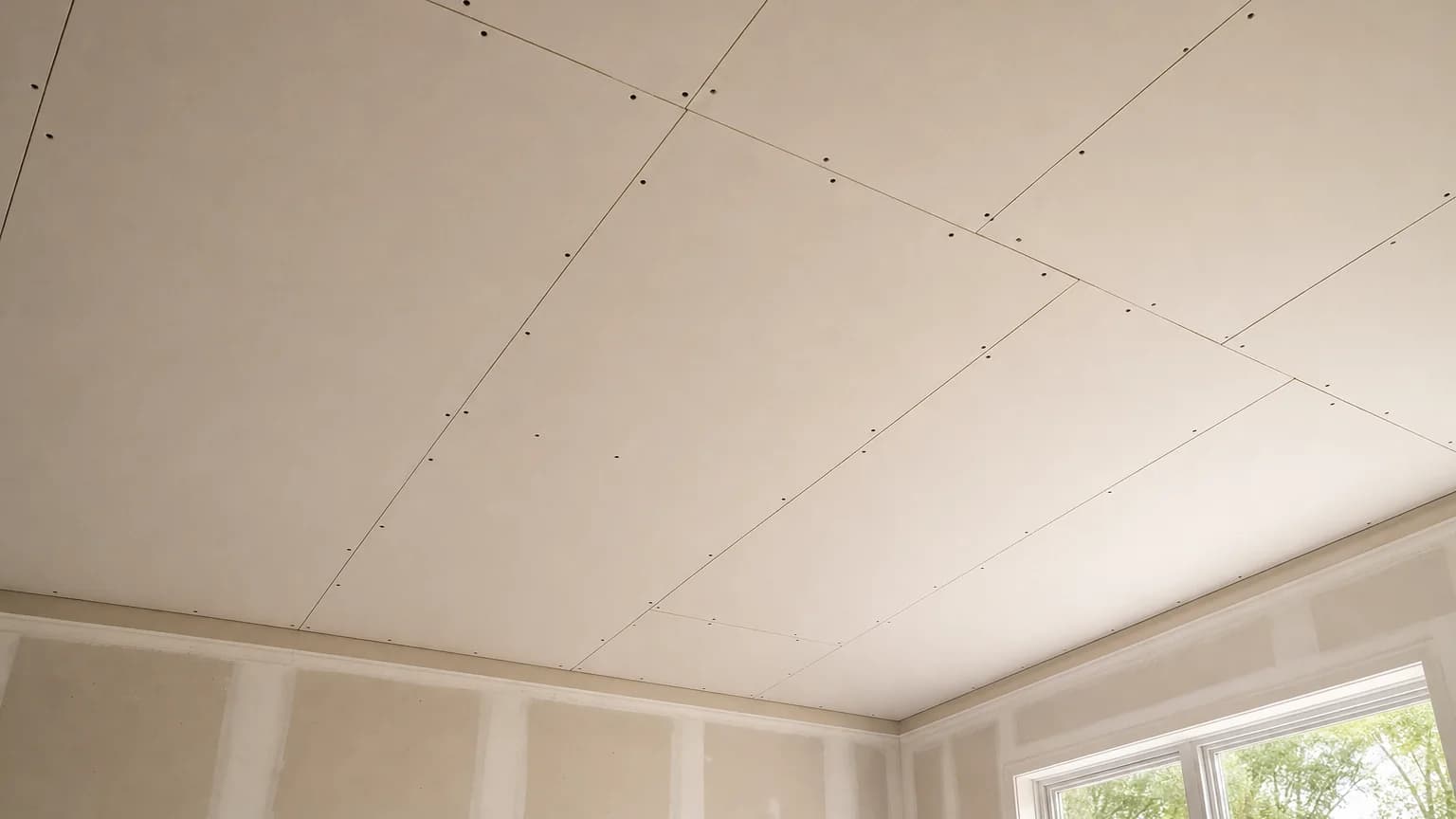
Illustration: New drywall panels installed on a residential ceiling
Illustrative image of this service, not a Douglas Taping job-site photograph.

Drywall ceiling installation creates or replaces the overhead surface before taping, finishing, primer, and paint.

When does a ceiling need new drywall

A ceiling needs new drywall when the existing surface is missing, sagging, removed, heavily damaged, or better covered with sheetrock than repaired spot by spot. Old popcorn ceilings and failing plaster ceilings are common cases where covering the surface with new sheetrock beats chasing cracks one by one.

Ceiling work should not hide an active leak, loose plaster, unsafe material, or a wet cavity. Those issues need to be addressed before new board is installed and finished, because the finished ceiling is only as reliable as the surface or framing behind it.

Related work: Drywall Installation, Drywall Wall Installation.

How do ceiling seams disappear under light

Ceiling seams disappear under light when the board is fastened well, the tape is sound, and the finish coats are feathered wide enough to avoid a ridge. Ceilings are unforgiving because fixtures and windows throw light across the surface from shallow angles.

Douglas plans ceiling seams, screw setting, and finish width with that light in mind. A seam that looks acceptable before primer can still flash after paint if compound shrinks, edges are narrow, or the finish level does not match the room.

Related reading: Ceiling Repair in Westfield: Why Do Seams Keep Cracking?, Drywall Installation in Summit: Replacing Plaster While at Home.

Should popcorn or plaster ceilings be covered

Popcorn or plaster ceilings should be covered only when the existing surface is suitable to remain and lamination will give a better result than scraping, patching, or tearing out. For popcorn, covering is one of two options we offer alongside scraping; we use 1/4- or 1/2-inch sheetrock depending on how straight the ceiling is.

For plaster ceilings, lamination can make sense when cracks or surface failure are widespread but the conditions are appropriate for a new sheetrock surface. Wet, unsafe, or severely loose material should not simply be hidden behind new drywall.

Questions about this work

Is ceiling drywall harder to finish than wall drywall?

Often, yes. Ceilings are affected by overhead work, fixture openings, gravity, and raking light that can show seams and ridges more clearly.

Can Douglas Taping install drywall over a popcorn ceiling?

Yes. Covering popcorn with new sheetrock is one of the two ways we remove it; the other is scraping. The ceiling's age and condition decide which one makes sense.

Can new drywall be installed over a plaster ceiling?

Sometimes. Douglas has done plaster ceiling lamination for general contractors, but loose, sagging, wet, or unsafe plaster needs assessment before it is covered.

Does a ceiling installation include painting?

Yes, if you want it. Once the new ceiling is taped and finished, we can prime and paint it too. Mention it when you ask for an estimate.

What photos help for a ceiling installation estimate?

Send a wide photo of the whole room and ceiling, close-ups of damage or texture, ceiling height if known, fixture locations, and any information about leaks or old plaster.

Get Started

Get a Free Estimate

Send a photo of the ceiling, one close-up of the damage, and tell us roughly how big the area is.

Upload up to 5 photos to help us provide an accurate estimate. (Max 10MB each)

Response within 24 hoursPrefer to call? (877) 551-9553