Start with the plaster's condition and what needs to change
Two questions settle most of this decision: is the existing plaster sound enough to keep, and does your renovation need access to what sits behind it? Answer both before choosing a scope. Otherwise you risk paying to finish a surface that has to be opened again later, or tearing out plaster that could have stayed.
Short Hills is part of Millburn Township, as the Township's community overview explains. Our Short Hills service area includes the neighborhood around Cora Hartshorn Arboretum. Municipal questions about a plaster renovation go to Millburn, including work that opens walls for wiring, plumbing or insulation.
Ask the contractor to confirm any requirements with the Millburn Building Department, especially when opening walls for other trades. Mention wiring, plumbing or insulation changes you already want so those jobs can be coordinated before the walls are finished. No permit-history research is needed to start the conversation.
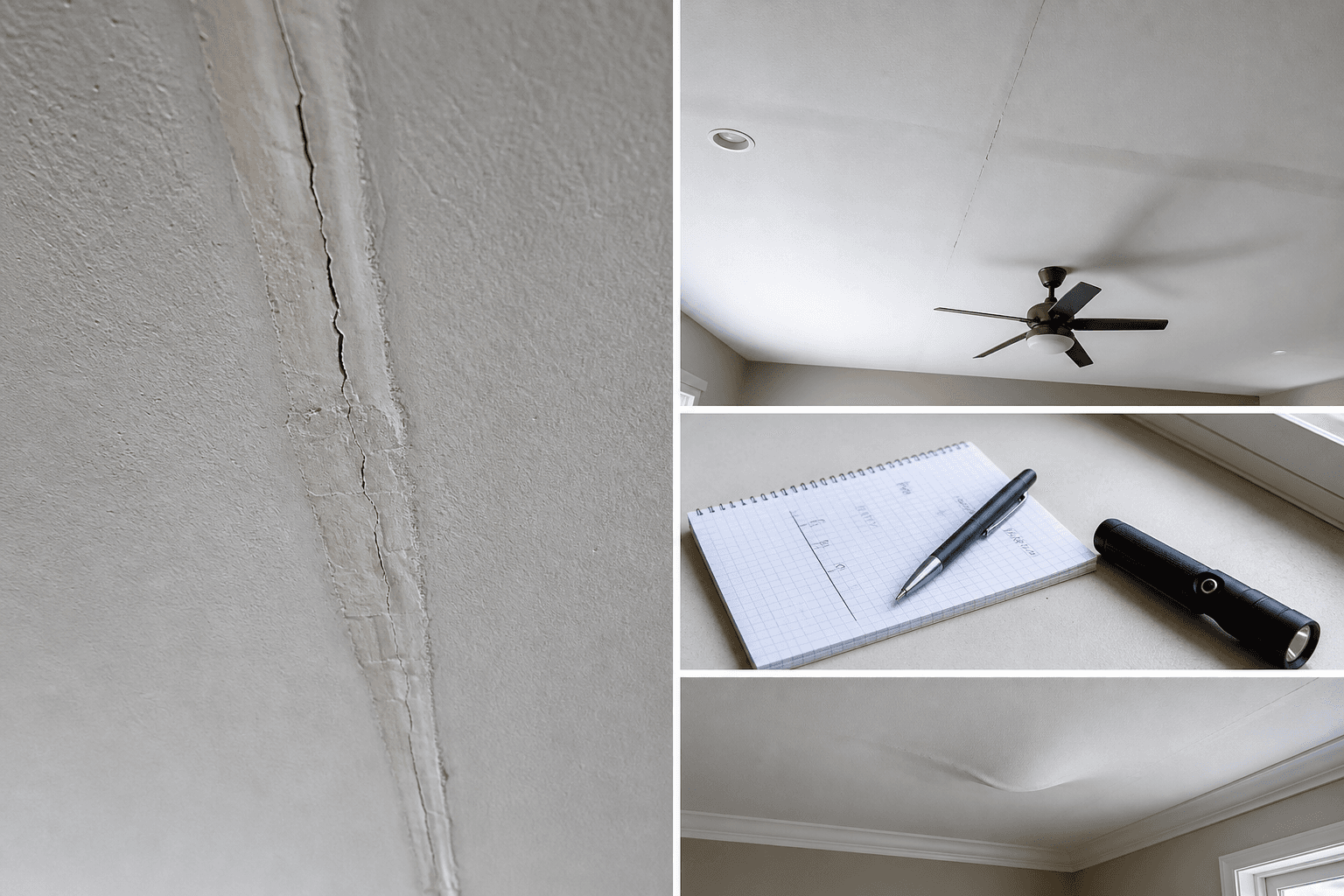
Isolated surface damage, such as a few cracks or a dented corner, is a different problem from plaster that is loose, bowing, sagging or falling. Loose or sagging plaster shows that something has changed, but not what. The plaster may have lost its grip on the lath, or the lath, the framing or a leak may be behind it, and someone needs to find out which before the area is patched or covered. Widespread cracking sits between the two. A wall full of cracks does not, by itself, tell you whether the plaster is attached well enough to stay behind a drywall overlay.
Ceilings call for extra caution. A stain, a crack or a fallen piece shows that something has gone wrong, but not what. The failure may be in the plaster, in the lath it grips (the wood strips or metal backing behind it) or in the framing above. Before ceiling repairs, we look into failed plaster bases, leaks and structural sagging. A water stain can come from a leak that is still active, so make sure the source has been dealt with before the ceiling is closed up.
Photos can show cracks and trim you want to preserve, but not how firmly plaster is attached. Douglas Taping serves Short Hills and can assess repair, overlay and replacement options. Photograph the whole wall, the damaged areas, door and window casings, baseboards and built-ins so the discussion includes what should stay.
Keep the plaster when repair fits the damage
When damage is confined to a few spots, plaster repair and texture matching may preserve more of the existing room than replacement. Keep isolated cracks separate from cracking across several ceiling areas. The estimate should identify both the repair boundaries and the condition of the plaster that stays.
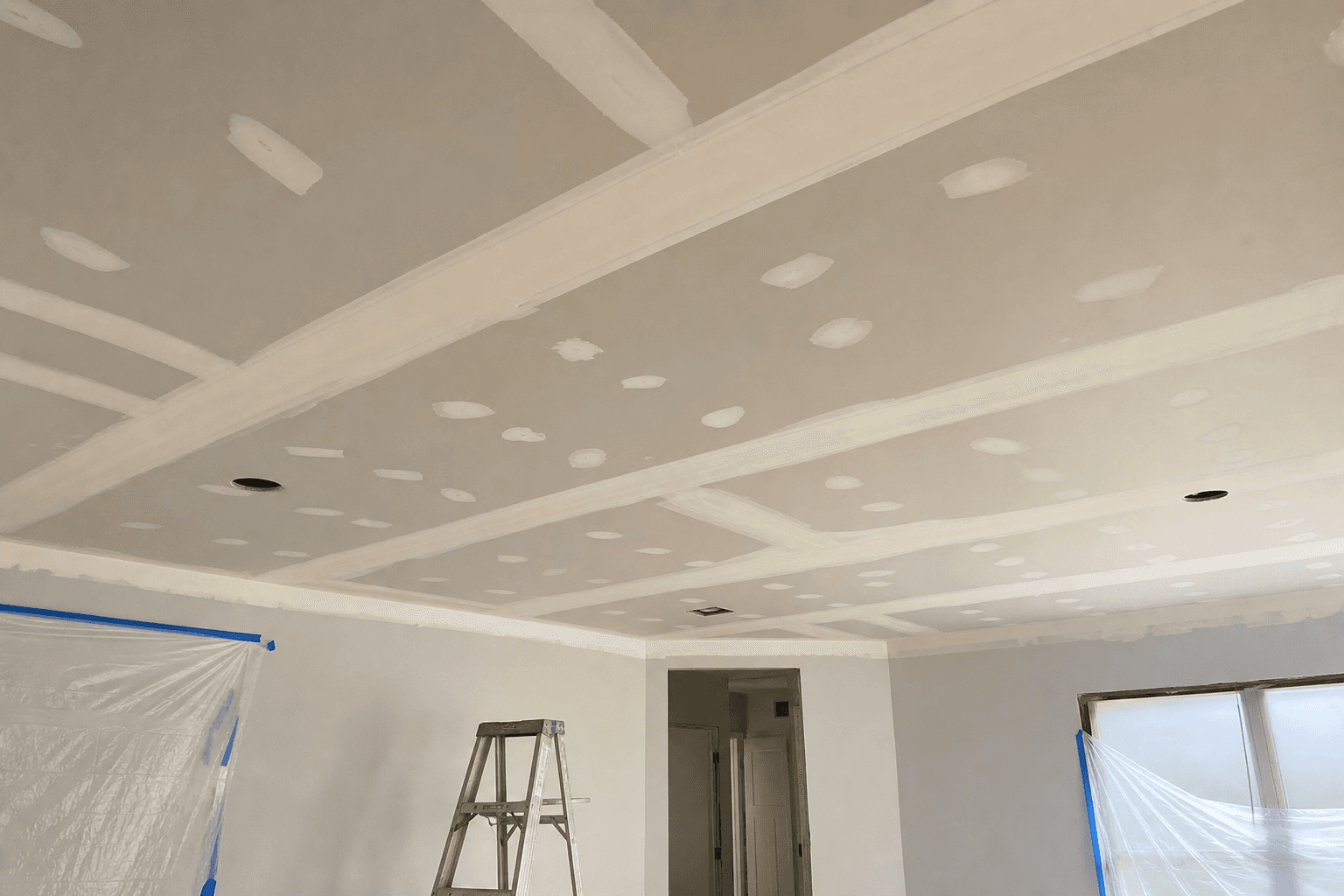
Repair and skim coating are different jobs. Repair addresses damage; skim coating smooths texture across a sound surface. A thin coat alone will not reattach loose plaster or permanently stop recurring cracks.
Some repairs use a drywall patch within the plaster. Ask whether it will sit even with the surrounding wall and how the texture will blend. The contractor should work out the materials and thickness needed to achieve that result.
When comparing repair proposals, look at where each one draws the repair boundaries, how the texture will be matched and how much finishing and painting follows. A small patch can still mean repainting a full wall to get an even color.
Is this a DIY job? That depends on scope. Loose, bowed or falling plaster is not an ordinary cosmetic patch. Two cracks that look alike can also come from very different causes, which is why appearance alone cannot tell you how much work is needed.
An overlay leaves the plaster in place and changes the surface
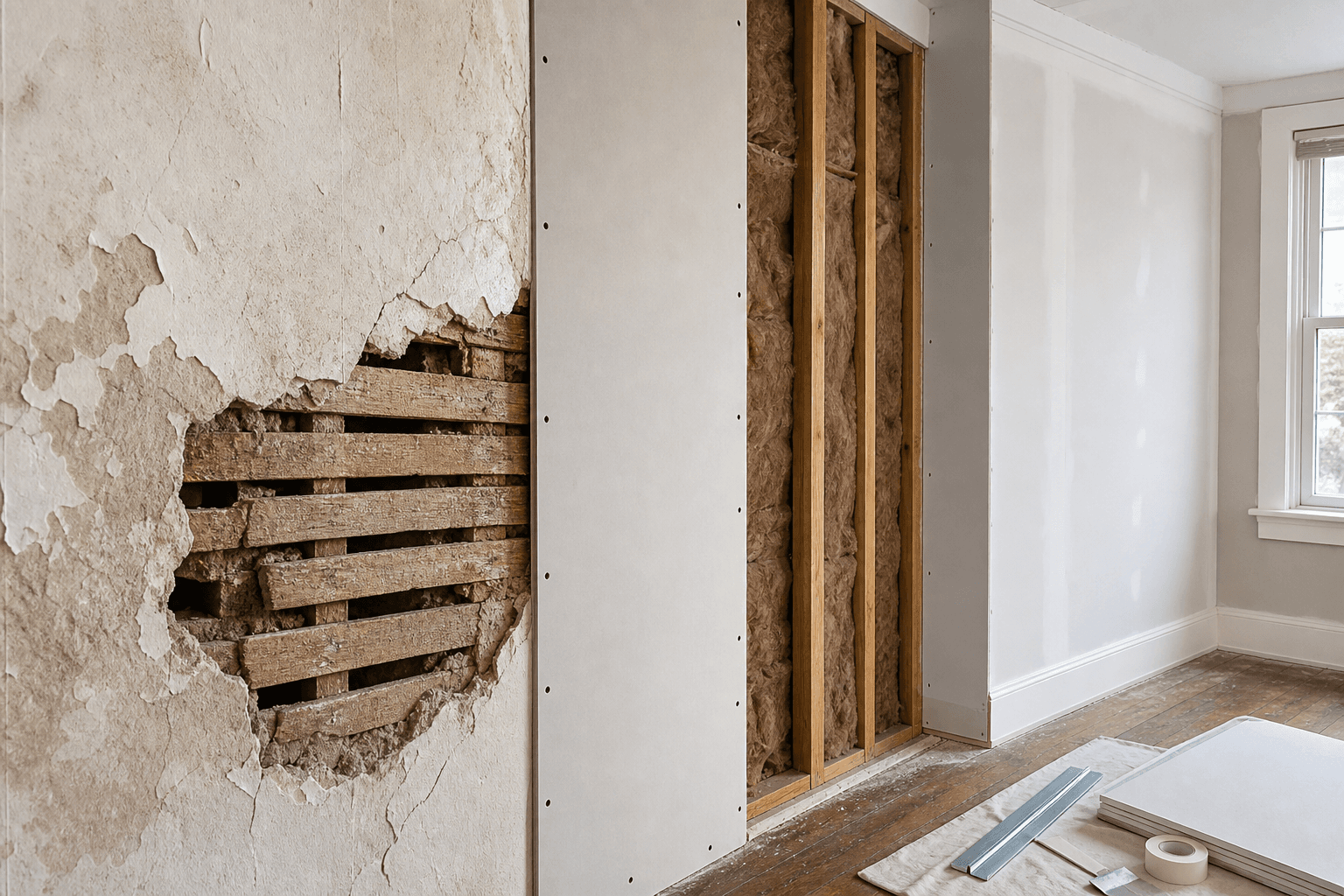
An overlay, sometimes called lamination, means fastening new drywall panels over the existing plaster instead of tearing it out. Unlike a skim coat, it adds new board that becomes the finished face. Because the plaster stays, the cavity behind it stays closed, so an overlay does not give you the access that removal does for inspection, insulation or other planned work. Treat it as its own proposal.
A plaster ceiling overlay needs an assessment of the existing layers and their attachment. Do not hide sagging, loose or bowing plaster, or an unresolved leak, under new board. For ceiling lamination, Douglas Taping uses 1/4-inch or 1/2-inch drywall depending on ceiling straightness and the assessed assembly; thickness is not a substitute for checking support.
Added thickness changes how the wall meets door frames, window trim and fixtures. Show Douglas any molding or built-ins you want to keep and ask how they will look afterward. The contractor should coordinate any electrical or trim adjustments and explain whether they are included.
Board type and thickness, support, fastening and whether the structure suits the added weight belong to the project assessment, not a general rule. A thickness that works on one job is not automatically right for a plaster ceiling in another house.
Neither overlay nor removal should be assumed hazard-free. Whether existing paint, plaster or patching contains lead or asbestos is unknown without proper testing, and both approaches can involve cutting, drilling or sanding. An overlay also does not guarantee dust-free work or a lower total cost.
Removal provides access behind the wall
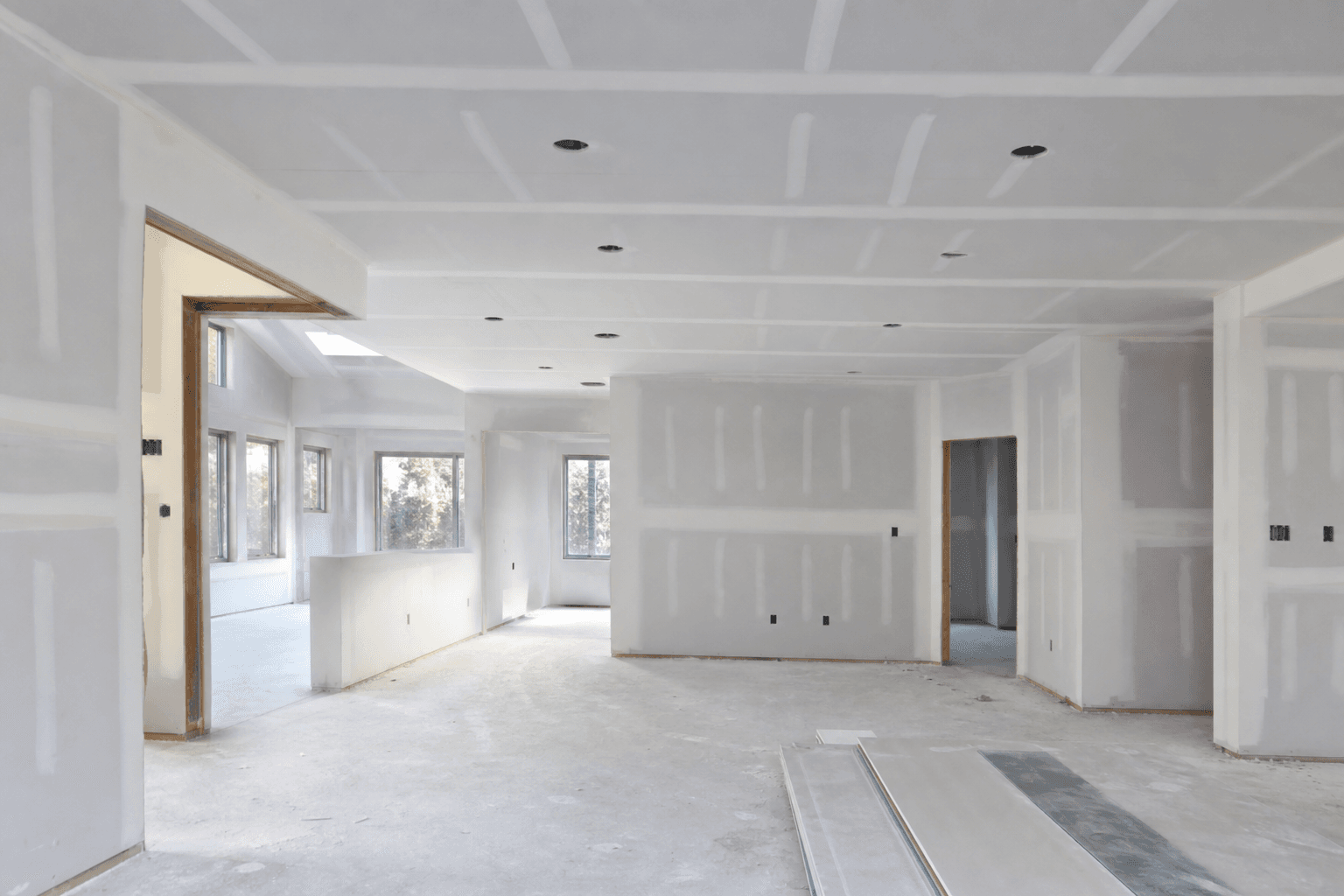
Full removal takes a wall or ceiling back to the framing, usually removing both the plaster and the lath it was applied to until the studs or ceiling joists are exposed.
Access is the main reason to choose it. With the framing open, the cavity can be inspected, and you can add insulation or carry out wiring or plumbing changes you already planned. The tradeoff is demolition: dust, heavy debris to bag and haul away, and more stages before the room has a finished surface again.
Age alone is not a reason to tear plaster out. Replacement is worth considering when the plaster is no longer sound enough to keep or when you need what is behind it. If the plaster is sound and nothing behind it needs to change, removal can add work without solving a problem.
Douglas Taping's occupied-home replacement work can cover demolition, insulation, hanging drywall and joint finishing. Painting is available as an add-on to that work, not independently. The occupied-home replacement guide explains what to ask about room access, dust and returning to normal use.
Electrical work, plumbing, lead or asbestos testing and handling, and permits fall outside that confirmed scope. Each proposal you compare should name who is responsible for them.
Living in the house during the work takes planning. Agree in advance on which rooms are closed and when, how floors, furniture and nearby spaces are protected, what order the rooms are done in, and how debris and daily cleanup are handled.
Compare estimates for the same finished result
Two estimates can only be compared when they describe the same finished room. Before looking at totals, put the proposals side by side and check these points.
Ask whether each quote covers the same rooms and whether it repairs, covers or removes the plaster. Those are different jobs, not interchangeable prices. Douglas should measure the work and explain why an option suits the condition of your walls.
Check that the result includes restoring affected trim and leaving the surface ready for paint. Ask whether insulation or other work behind the wall is needed and who coordinates it. If you want painting added, make that clear rather than assuming it comes with finishing.
Describe rooms you need to keep using, and ask how dust, belongings and debris will be handled. The least disruptive suitable option may matter more to you than the lowest initial price.
When you request an estimate, describe the conditions you have seen and ask each proposal to state what was assessed, what is included and what is excluded.
Before anyone looks at the walls, it helps to jot down a few things: rooms involved, any past leaks you know of, and any wiring, plumbing or insulation changes you are planning. Those details shape whether the proposal covers only the surface or also what sits behind it, and they make competing estimates easier to compare line by line.
For plaster repair or replacement in Short Hills, call Douglas Taping at (877) 551-9553 with your room list, photos and plans for any work behind the walls. Ask for the options that suit the assessed condition, with trim, finishing and optional painting priced clearly.
Common questions
Is plaster repair or drywall replacement better for a Short Hills home?
Repair may be enough for isolated damage in firmly attached plaster. Replacement is worth considering when the plaster cannot stay or wiring, plumbing or insulation work needs access behind it. An overlay keeps the old plaster in place and changes trim transitions. Choose after assessing the wall, not from the home's age alone.
How should I compare plaster repair and replacement costs?
Show each contractor the same rooms and explain the result you want. Ask what stays, what comes out and whether the quote includes restoring trim, cleanup and a paint-ready finish. Keep optional painting clear. The contractor should measure the work; the lower total may describe less of it.
Which building office handles a Short Hills renovation?
Short Hills is part of Millburn Township. Ask your contractor to confirm requirements with the Millburn Building Department, especially if the work opens walls for plumbing, electrical changes or insulation. You do not need to research permit history to ask about plaster repair.
Can damaged ceiling plaster simply be covered?
Not before its attachment and the cause of damage are assessed. Loose, bowed or falling plaster may involve the lath, framing or a leak. Keep people out from under a failing ceiling and have it assessed before choosing repair, overlay or replacement.