
Douglas Taping logo

Drywall Finishing

Finish coats, corner work, sanding, and Level 4 or Level 5 decisions for smooth paint-ready drywall.

Get a Free Estimate
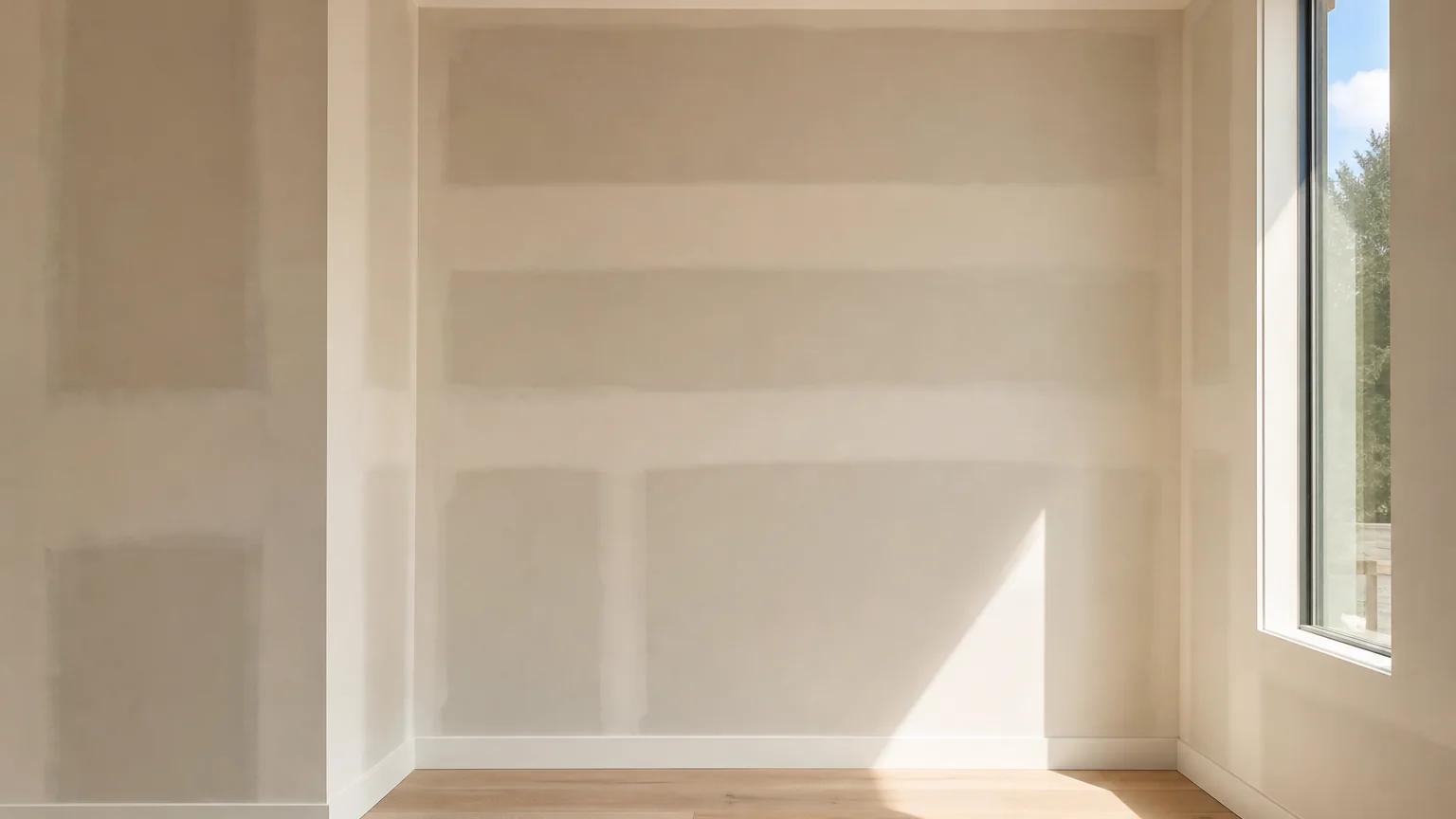
Illustration: Finished drywall joints and corners ready for primer
Illustrative image of this service, not a Douglas Taping job-site photograph.

Drywall finishing is the visual part of the drywall trade: building, feathering, and sanding compound until the surface is ready for primer and paint.

What makes drywall finishing look smooth

Drywall finishing looks smooth when the compound is built out wide, feathered gradually, sanded evenly, and matched to the room's light and paint. The goal is not to pile on compound; it is to make seams, fasteners, corners, and patches disappear into the surrounding plane.

Curved walls, coffered ceilings, and high-light rooms need especially careful finishing because small flat spots and ridges stand out. Douglas checks the surface in stages so corrections happen before primer and paint make defects more obvious.

Related work: Taping & Finishing, Drywall Taping.

When does a wall need a Level 5 finish

A wall needs a Level 5 finish when the surface will be exposed to raking light, dark or glossy paint, or close visual attention. Level 5 adds a thin coat over the full surface after the joints are finished, reducing the difference between drywall paper and joint compound.

Level 5 is not required in every room. Douglas may suggest it for selected walls, ceilings, curved areas, or coffered details where standard finishing is more likely to show seams or texture changes after paint.

Related reading: Drywall Finishing in Newark: What Changes a Room's Cost?, Drywall Finishing in Westfield: Is Level 5 Worth It for an Addition?.

Can bad drywall finishing be fixed

Bad drywall finishing can often be fixed, but the repair depends on whether the problem is only surface compound or something deeper. Ridges, scratches, and narrow feathering are different from loose tape, wet board, poor fastening, or framing movement.

Douglas first decides what can stay and what has to be cut back or rebuilt. Adding another thin coat over failed tape or loose board will not solve the problem, so the estimate should identify the cause before promising a smooth finish.

Questions about this work

What does drywall finishing include?

It includes coats of joint compound over seams, fasteners, corners, and repairs, followed by sanding and blending to the agreed finish level.

When should I ask for Level 5 finishing?

Discuss Level 5 where light runs across a wall or ceiling, paint will be glossy or dark, or the surface is a curved wall, coffered ceiling, or other high-visibility area.

Can you fix uneven drywall finishing?

Usually it can be assessed and corrected, but the scope depends on whether the issue is only surface compound or comes from poor taping, loose board, moisture, or framing.

Is drywall finishing dusty?

Sanding can create dust. Douglas protects the work area and takes dust control seriously, but no drywall finishing job should be described as completely dust-free.

Does finishing include painting?

Only if you ask for it. We offer priming and painting after the finish coats, and it gets listed in your estimate.

Get Started

Get a Free Estimate

Send a wide photo, a close-up of the work area, your town or address, and the finish you want after the repair.

Upload up to 5 photos to help us provide an accurate estimate. (Max 10MB each)

Response within 24 hoursPrefer to call? (877) 551-9553