Describe the texture you want to keep
Keeping the existing texture is a different request from changing the whole ceiling. Say that up front, then describe the pattern and the damaged area. The estimate should cover both the sound repair underneath and the appearance you want to preserve.
Douglas Taping serves Alpine; a local point of reference is Kearney House at the north end of Alpine Picnic Area in Palisades Interstate Park. For an opening left by a plumber or electrician, share your address, photos and why the ceiling was opened. Ask Douglas to coordinate readiness with that trade rather than expecting you to judge what can safely be covered.
Ask the responsible trade to confirm any requirements with the Alpine Building Department. Any required inspection must allow closure before patching begins; scheduling an appointment is not enough. This matters for openings made during plumbing or electrical work, not because every texture touch-up needs a permit.
You do not need to know the texture's name. A photo and a description such as "small bumps" or "a swirl pattern" are enough to start. Douglas can assess what kind of match is possible.
Take close-up photos showing the shape and spacing of the pattern, plus a wider shot showing where the damage sits on the ceiling. Together they show what the repair has to blend into and how much ceiling surrounds it. They show appearance only, though. A photo can't reveal what the texture or the material beneath it is made of, whether it is safe to disturb, or which matching method suits that ceiling.
For popcorn texture, compare the larger options before committing to a patch. Douglas Taping can scrape texture or cover it with drywall depending on age, texture, condition and budget, after suspect materials are assessed. Our popcorn-ceiling removal and covering guide explains what covering changes. If you want to retain the texture, confirm that a localized match is suitable and accepted for your ceiling.
Have the ceiling checked before patching
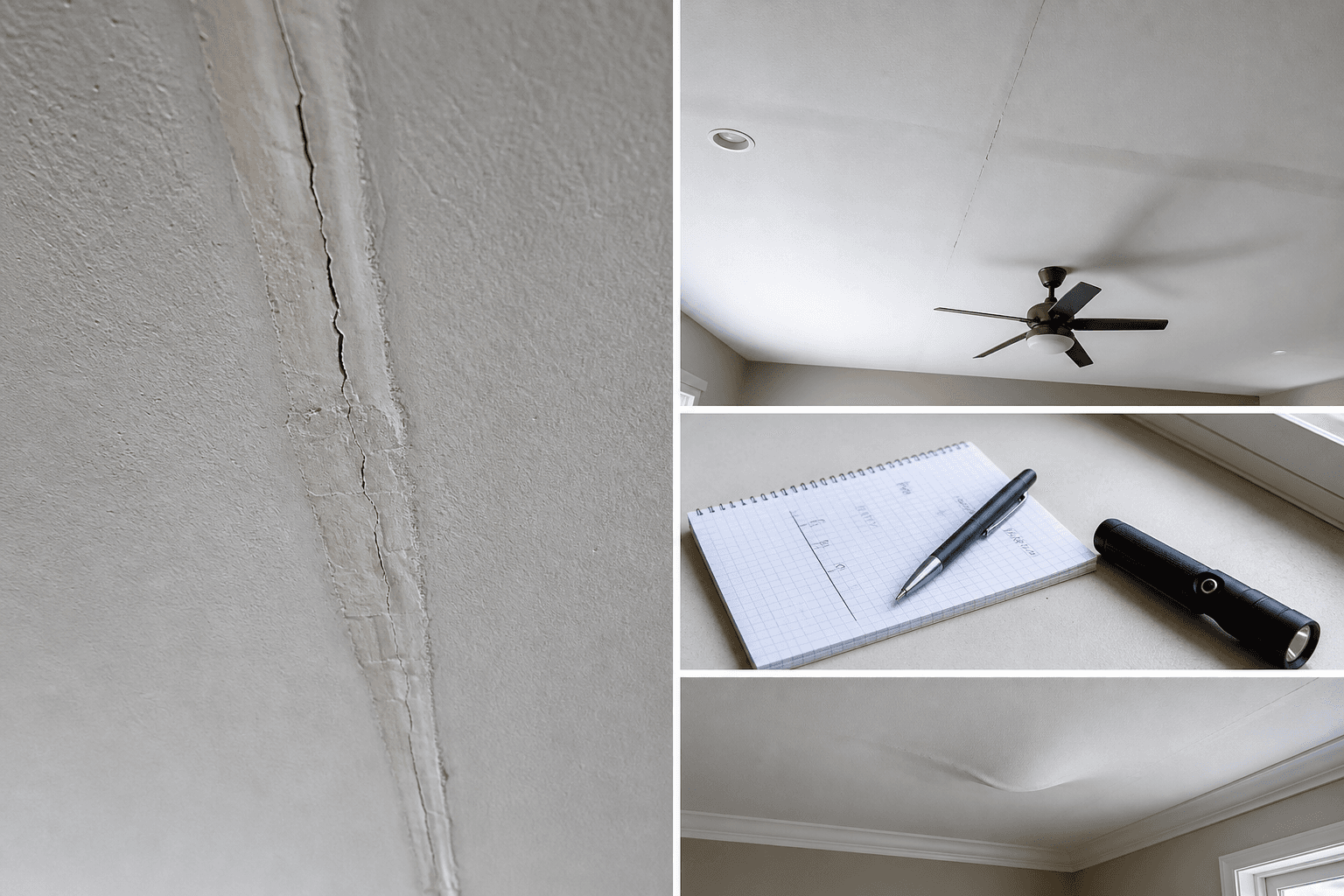
Matching the texture comes last. Moisture, mold, sagging or loose plaster needs assessment first. Keep people away from a sagging or failing ceiling, and do not press on it or pull at loose material. A good-looking patch does not prove the ceiling behind it is sound.
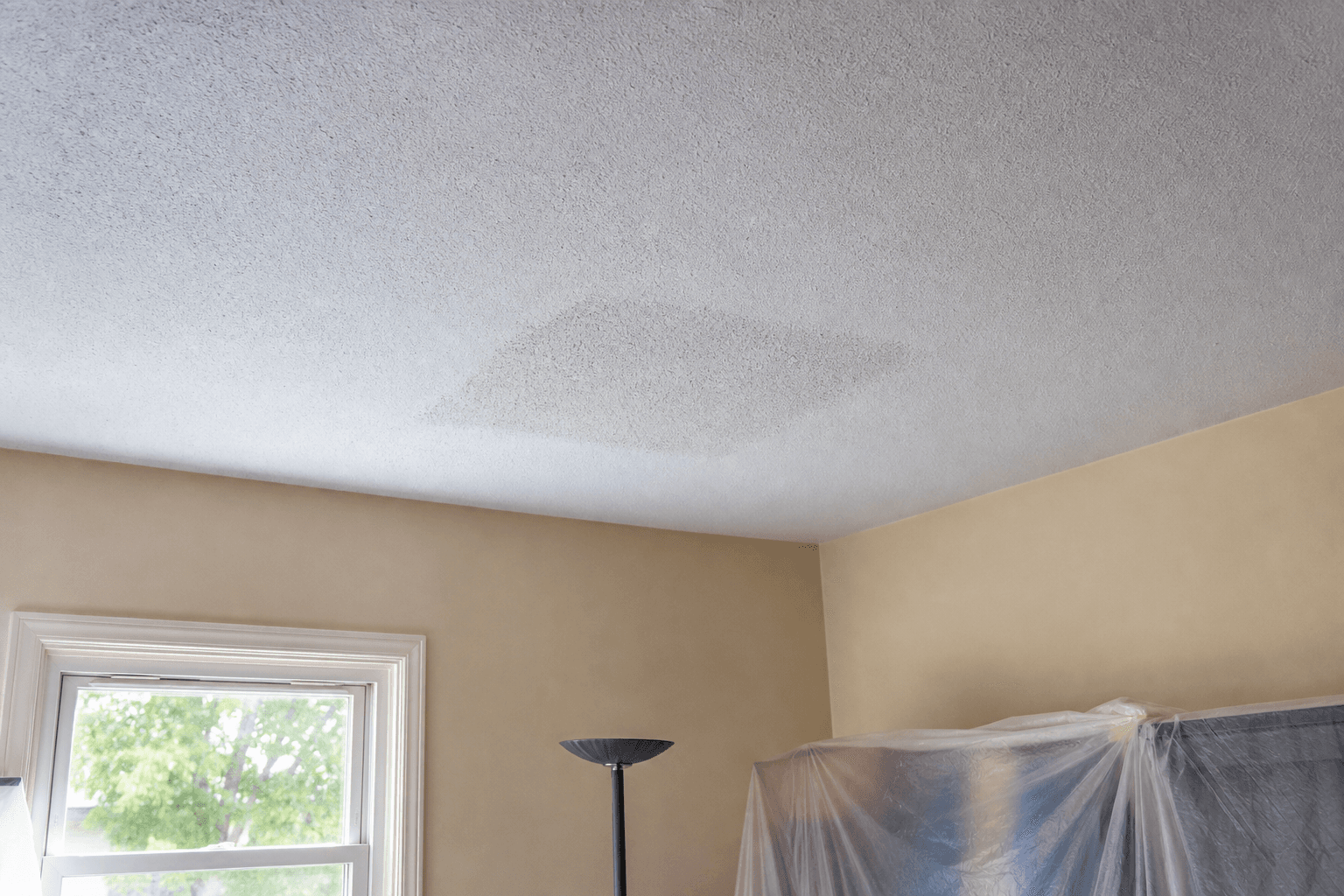
Leak damage is easy to misjudge. A stain that has dried, or board that feels firm again, doesn't prove the drywall can stay. The leak has to be fixed and the space behind the board assessed before anything is rebuilt. Closing a wet or contaminated cavity under a well-matched finish only hides the problem.
If the ceiling has older paint, plaster, texture or joint compound whose lead or asbestos status hasn't been checked, it needs assessment before it is disturbed. You can't judge that from how the ceiling looks or what its texture is called, and it applies whether you do the repair yourself or hire it out.
If the opening was cut so a plumber or electrician could reach something, confirm their work is finished, and that any inspection the job needed has been done, before the hole is closed. Whether a ceiling belongs to a fire-rated or otherwise specialized assembly also can't be judged without someone looking at that specific ceiling.
Ask whether plumbing behind the ceiling will need future access. Douglas recommends access doors near plumbing and uses moisture-resistant board on every water-damage rebuild. The contractor should choose board and doors compatible with the ceiling, including any required fire protection. Neither replaces leak repair and drying.
So the choice between doing it yourself and hiring turns on these open questions, plus two separate skills: making a sound repair, and making that repair disappear into the existing pattern. Being good at one doesn't guarantee the other. If what you really have is a seam that keeps cracking, use the recurring-seam ceiling repair guide instead.
Ask how far the repair will extend
The hole and the repair are rarely the same size. An opening might be a few inches across, but the finished and textured area around it is usually larger, because the new surface has to meet the old one somewhere. Before work starts, agree on both.
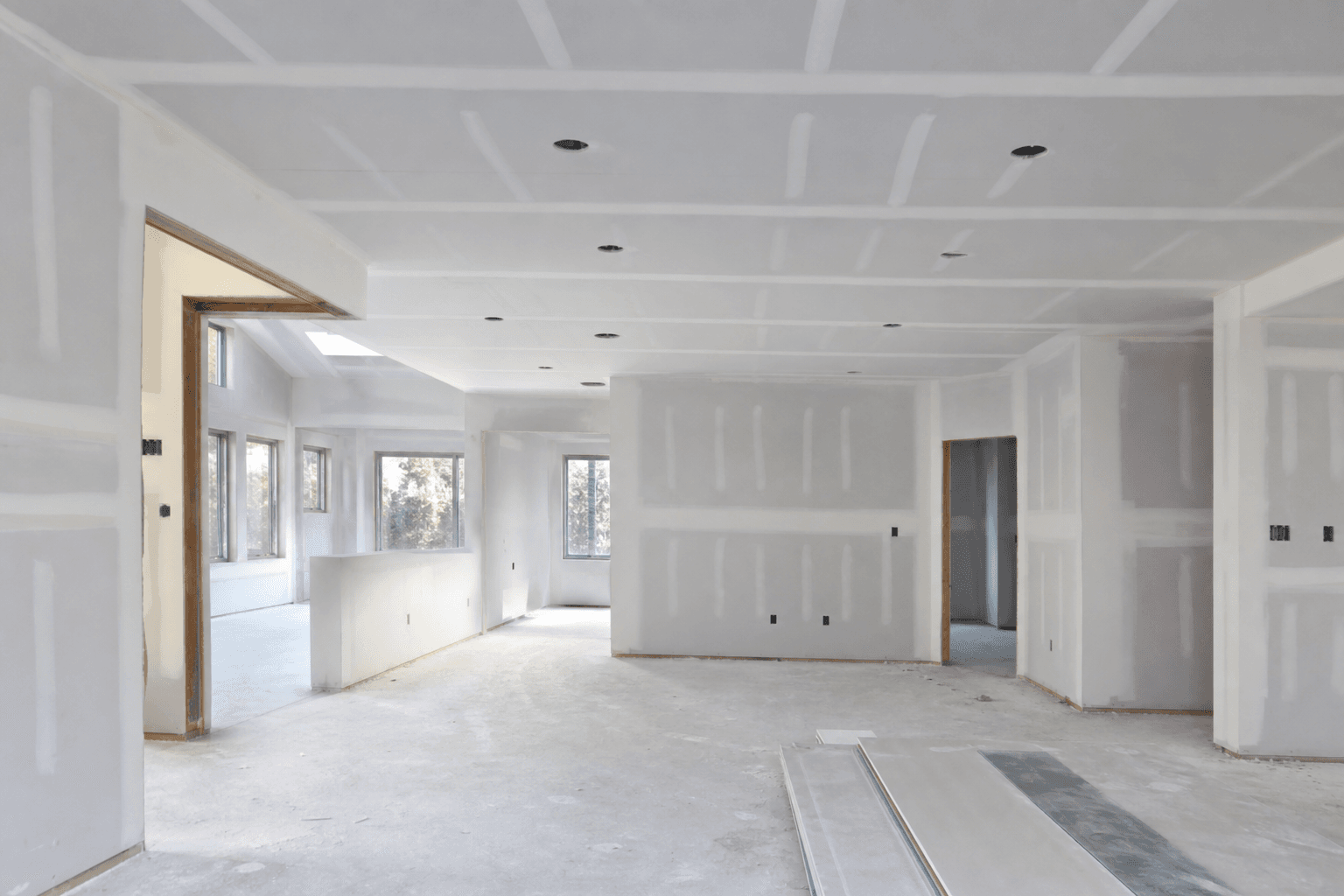
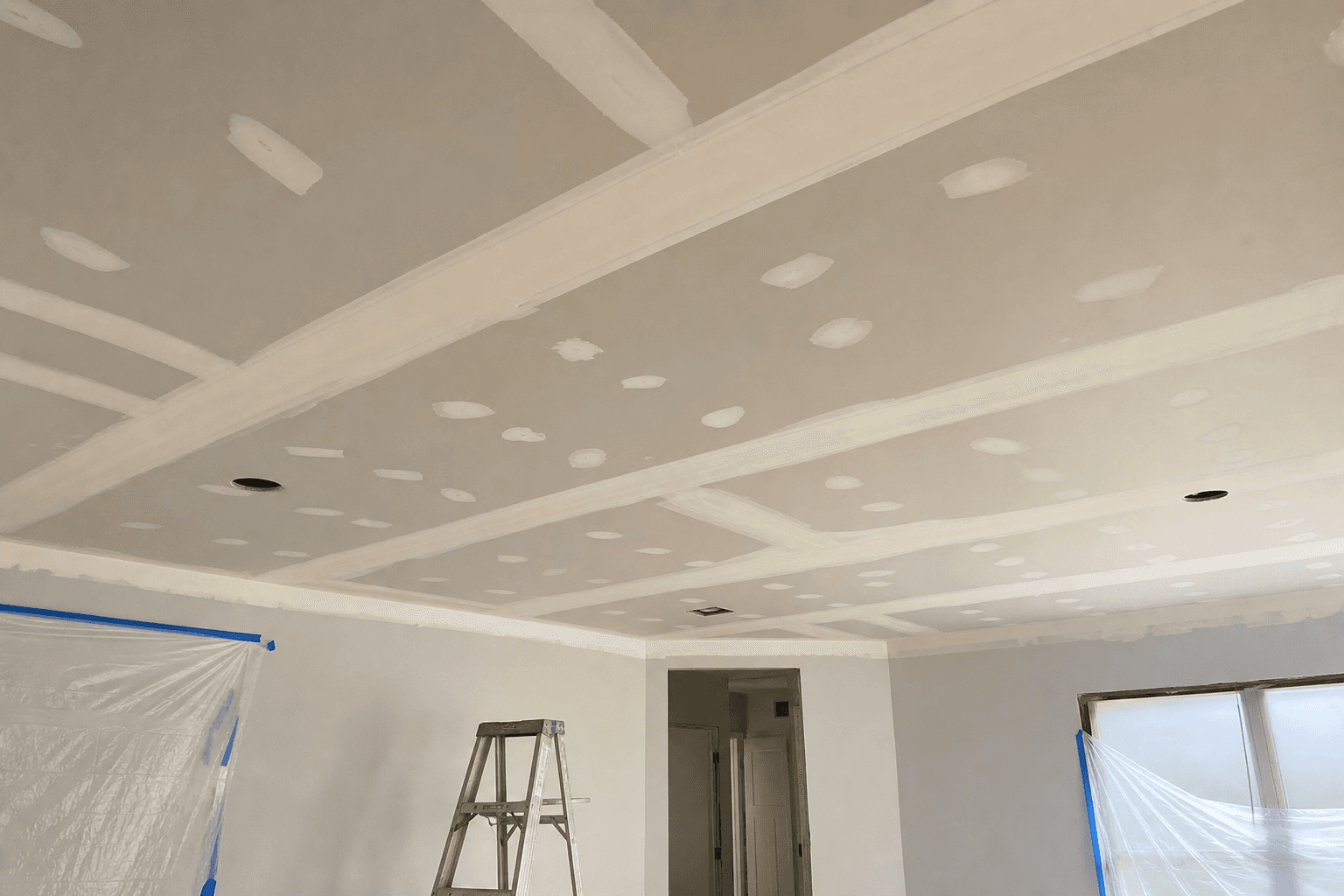
A textured ceiling patch generally happens in stages. First, the opening itself is repaired. Next, the patch edges are finished so the joint between new and existing material is flat and ready for texture. Only then is the visible pattern recreated.
That last stage is blending: working the repair's surface pattern out into the surrounding texture so the eye doesn't stop at a hard edge. Filling the hole is not the same thing. A filled hole can still read as a smooth or mismatched spot even when the repair underneath is sound.
Ask Douglas to show you how far the repair is likely to extend beyond the hole. You do not need to calculate a blending area or choose the matching method; you need to know what part of the ceiling will be worked on and how it should look afterward.
A hard edge in the texture can draw attention to the patch even when the board repair is sound. Ask how the pattern will blend beyond the opening and how the result will be reviewed in the room's normal light. There is no universal blend width that suits every pattern.
Discuss repainting and any visible differences
Primer and paint even out color and sheen, but they won't hide a surface pattern that doesn't match. If the texture over a patch is flatter, heavier or shaped differently from the ceiling around it, the difference can still show after both coats.
Painting needs its own boundary. The area that gets texture blending and the area that gets repainted aren't automatically the same. An estimate might cover painting only the repair, a larger section around it or the whole ceiling, so find out which is being proposed.
Whole-ceiling painting can help even out color and sheen, but it does not guarantee a texture match. Douglas Taping can add painting of the patched area or the whole ceiling to the repair; painting is not a standalone service. Agree on the boundary in writing.
Ask whether repainting just the patch or the whole ceiling is likely to give the better result. Share any paint information you already have, and let the contractor choose compatible preparation. Discuss what might still show under the room's normal lighting before deciding.
Ask what happens if the agreed repair is still noticeable. Who would propose more blending or repainting? What would that work involve? How would added scope and cost be approved before it begins? Don't assume extra work is included, or that it would fully remove the difference.
Share photos and the result you want
Send your Alpine address, photos and a short explanation of why the ceiling was opened. Mention known leaks or concerns about older materials, and say that you want to keep the existing texture. Douglas can measure the repair and assess the pattern; you do not need to reach the ceiling for a closer look.
Mention how far you would like repainting to go, as a starting point for discussion rather than a settled answer. Then ask two direct questions: will they take on a standalone patch of this size, and will they attempt your specific texture?
Those questions apply to us too. Douglas Taping offers ceiling repair and plaster repair, including texture matching on smaller plaster repairs, and drywall texturing. That makes a texture-matched patch a reasonable thing to ask us about, not a promise that every pattern can be reproduced exactly. If the damaged surface is old plaster, Plaster repair is the closer fit. Otherwise, start with Ceiling repair.
When estimates arrive, ask whether each includes blending into the surrounding texture or merely closing the hole. Painting should be clearly included or excluded. A lower price that leaves a smooth patch in a textured ceiling is not the same result.
Before work starts, ask for the initial scope to be written down, along with how any extra blending or repainting would be proposed, priced and approved if the first repair still shows.
For textured ceiling repair in Alpine, call Douglas Taping at (877) 551-9553 with photos and the reason for the damage. Tell us you want to keep the texture, and ask what kind of match and repainting to expect.
Common questions
How do you match texture on a ceiling repair?
The repairer first checks that the ceiling is ready for work, including any moisture or suspect older materials. After making a sound patch, they recreate the pattern and blend it into the surrounding ceiling. Ask what match is realistic; invisible results are not guaranteed.
How do you patch a swirl-textured ceiling?
Share photos of the swirl and say you want to keep it. Douglas can assess whether a local match is suitable and how far the repair may extend. The ceiling must be sound, with leaks resolved and suspect older materials assessed before disturbance.
What is this flat, grainy ceiling texture?
It may be a pattern called knockdown, with raised spots pressed flat, but you do not need its trade name. Send a wide photo and a closer view taken safely from below. The repairer can identify the pattern and discuss matching it.
Should I repair a ceiling opening left by a plumber myself?
First have the plumber confirm the work is complete and any required inspection allows closure. The ceiling also needs assessment for damage, suspect older materials and any required fire protection. A secure patch and a convincing texture match are separate skills, so professional help may be worthwhile.
How much should a ceiling drywall repair cost?
The repair and the amount of blending affect the price. Ask whether the quote includes matching the surrounding texture, protection and cleanup, with painting clearly priced or excluded. Douglas can measure and assess the work rather than estimate from a generic per-hole rate.