Douglas Taping logo

Commercial Drywall Finishing

Commercial drywall finished to a smooth, paint-ready surface for offices, storefronts, common areas, and work spaces.

Get a Free Estimate
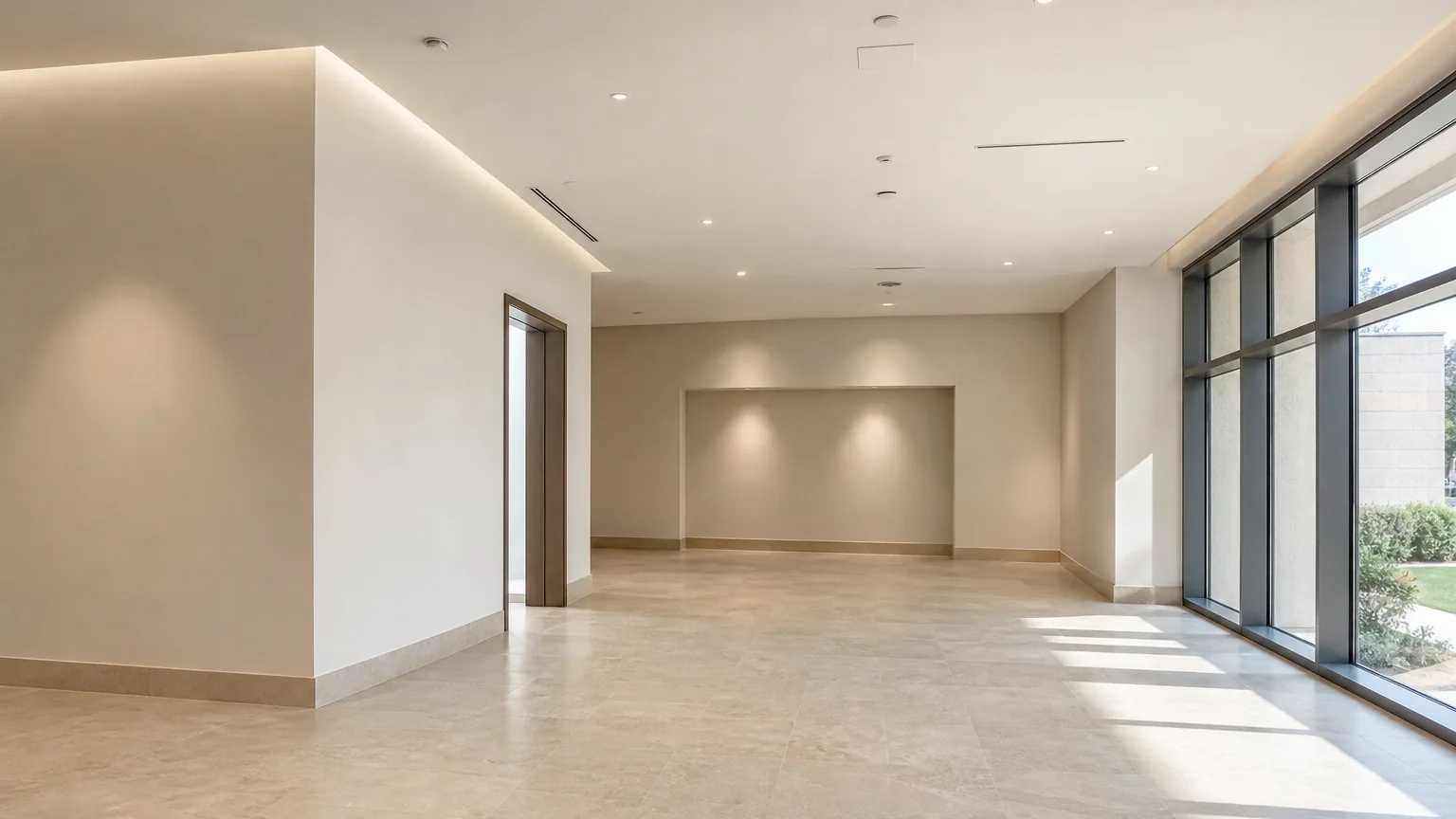
Illustration: Smooth finished walls in a commercial interior
Illustrative image of this service, not a Douglas Taping job-site photograph.

Commercial drywall finishing creates the paint-ready surface after taping, with finish level chosen around lighting, paint, and project specifications.

What finish level do commercial walls need

Commercial walls need the finish level that matches the lighting, paint sheen, use of the space, and any project specification. Level 4 may suit many areas, while Level 5-style full-surface treatment may be discussed for high-light or high-visibility surfaces.

Douglas does not assume every commercial wall needs the same finish. Offices, storefronts, common areas, back rooms, and tenant spaces can have different expectations, so the finish level should be stated before work starts.

Related work: Commercial Drywall, Commercial Drywall Installation, Commercial Drywall Taping.

How do office lights affect drywall finishing

Office lights affect drywall finishing by casting even, bright, and sometimes raking light across long wall surfaces. That light can reveal seams, sanding marks, narrow feathering, corner bead, and patch edges that were less visible before primer.

Douglas plans feathering and sanding around the finished lighting conditions when they are known. If the space will use glossier paint or strong overhead fixtures, the proposal may need a higher finish expectation for selected surfaces.

Related reading: Commercial Drywall in Newark: How to Compare Bid Scopes, Drywall Finishing in Westfield: Is Level 5 Worth It for an Addition?.

What should a commercial finishing proposal spell out

A commercial finishing proposal should spell out surfaces, finish level, sanding, dust control, access, schedule, primer or paint responsibilities, exclusions, and how patches or existing walls will be blended. Clear scope prevents finish disputes late in the project.

Douglas can finish new walls and commercial patches, but they should not be described as one vague smooth finish. New board, existing walls, repaired areas, and ceiling patches may each need different work to reach the expected appearance.

Questions about this work

How should a GC choose a drywall finish level?

It depends on lighting, paint sheen, use of the space, and any project specification. Level 4 fits many areas; Level 5 may be considered for high-light surfaces.

Does commercial finishing include paint?

Paint can be added. We offer primer and paint for commercial spaces too, priced as part of the proposal when requested.

Can Douglas finish commercial patches and new walls together?

Yes, if the scope identifies both. Patches and new walls should be described separately so finishing expectations are clear.

How does lighting affect commercial drywall finishing?

Long walls, bright fixtures, windows, and raking light can reveal seams or ridges, so they influence finish level and feathering.

What should be included in a commercial finishing proposal?

Surfaces, finish level, sanding, dust control, access, schedule, primer or paint responsibilities, and exclusions should be stated.

Get Started

Get a Free Estimate

Send the commercial scope, photos or drawings, ceiling heights, finish expectations, and the schedule you are working toward.

Upload up to 5 photos to help us provide an accurate estimate. (Max 10MB each)

Response within 24 hoursPrefer to call? (877) 551-9553